
HASAG–Apparatebau (Pelcery) Camp in Częstochowa
- by Dr.Felicja Karay z"l
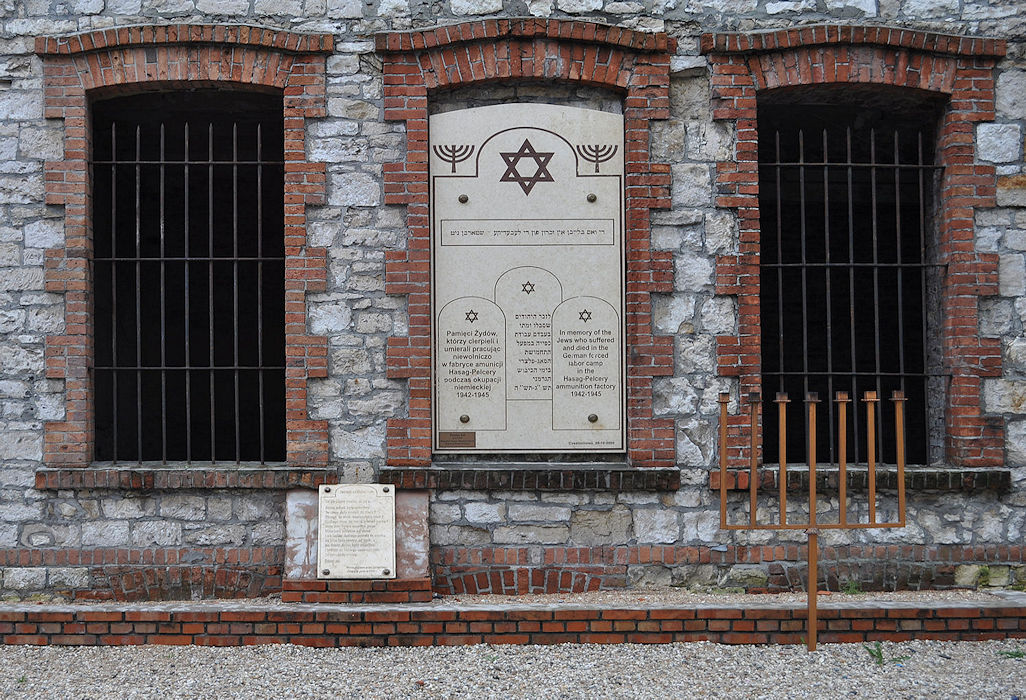
In the second half of 1942, the “Pelcery” factory was acquired by the German armaments company Hugo Schneider Aktiengesellschaft (HASAG) from Leipzig and was transformed into the HASAG Apparatebau ammunition factory, producing munitions for the need of the Third Reich.
At that time, the administrative director of the HASAG plant in Częstochowa was Ernst Lüth. The main workforce consisted of Jews, who were sent from the “Small Ghetto”, until it was liquidated in June 1943. Most of the Jews left alive were imprisoned in the HASAG camp. A force of Polish workers was created, who worked in HASAG as part of forced labour, often doing the same work as the Jewish prisoners.
About the Author – Dr. Felicja Karay (1927-2014)
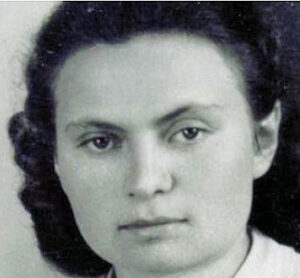 Dr. Felicja Karay was born as Fela Schächter in Kraków on 26th January 1927. Following the German invasion, now a schoolgirl, she fled through Eastern Poland without finding shelter. So, she returned to Kraków and smuggled herself into the ghetto in November 1942.
In March 1943, she was deported to Płaszów concentration Camp, then to the Skarżysko-Kamienna Jewish labour camp, Factory C. In July 1944. she was sent to the Hugo Schneider AG (HASAG) camp, a Buchenwald sub-camp. The camp was liberated by Red Army soldiers in April 1945.
After her return to Kraków and Łódź, Schächter became involved in organising cultural events for the Ha’Shomer Ha’Tzair Zionist movement and prepared for her emigration to Palestine. She earned her higher school certificate and took lessons in drama and voice. In 1950, she emigrated to Israel. After graduating from Tel Aviv University, she became a high school history teacher in the Rishon LeZion kibbutz. She married and had two children.
In the early 1980s, during school holidays, Felicja Karay began carrying out archive research on the history of the Skarżysko-Kamienna Jewish labour camp.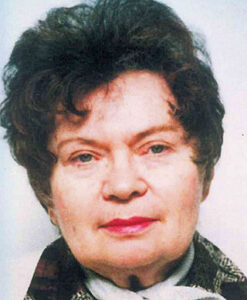
As a result of her research, in 1987, she gained her doctorate. In 1996, her thesis was published in English, entitled “Death Comes in Yellow: Skarzysko-Kamienna Slave Labour Camp”.
At the Diaspora Research Institute in Tel Aviv, Karay researched the culture and the special situation of women in labour and concentration camps. She also presented seminars at the Yad Vashem Institute in Jerusalem and for the Israeli Ministry of Education. Felicja Karay lived in Rishon LeZion kibbutz.
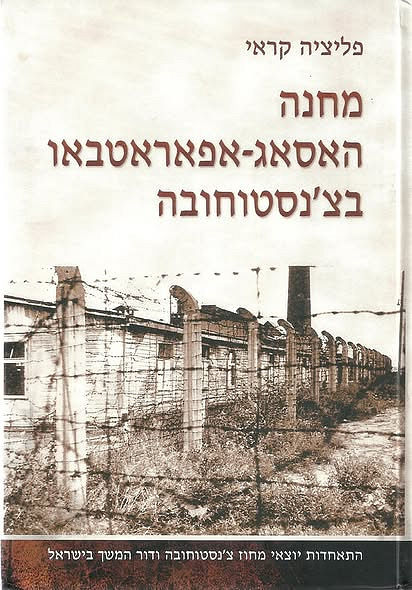
THIS IS A DETAILED, COMPREHENSIVE, ACADEMIC STUDY
OF THE “HASAG-PELCERY” FORCED LABOUR CAMP IN CZĘSTOCHOWA.
This book was published in 2006 by the
Association of Częstochowa and District Jews in Israel
To obtain a copy of the original HEBREW version of this book,
contact ALON GOLDMAN.
Click on any chapter headings to reveal texts.
(The numbers in brackets, after each entry, correspond to the appropriate page numbers in the book.)
Title Pages & Dedication
Table of Contents
Introduction – Arye Edelist z”l, 2006 (11-12)
Introduction – Alon Goldman, 2019
Words of Gratitude (13-14)
Foreword (15-19)
PART ONE: IN THE SIGN OF THE BUDIN-DEGENHARDT PARTNERSHIP
A: The Man & His Factory (23)
B: Why Częstochowa (26)
C: How Pelcery Became Apparatebau (28)
A: The Miracles of Częstochowa (37)
B: Work is Our Life (43)
C: Golden Hands Will Save Lives (45)
A: The Pole’s Prophecy (49)
B: The Rumours, the Orders and the Reactions (50)
C: They Killed and Also Took Possession (52)
D: The Chronicles of One Bunker (54)
E: How Will We Save Our Children? (56)
PART TWO : BETWEEN THE “SMALL GHETTO” AND THE APPARATEBAU
A: The Three Who Were One (63)
B: Commander Degenhardt’s Manoeuvres (65)
C: Welcome to Apparatebau (69)
A: Longing for the “El Dorado” Ghetto (75)
B: As Long as We Live – We Live! (77)
C: The Beginning of the Awakening (79)
A: The Fateful Census and its Consequences (83)
B: “Go to HASAG! Go to HASAG!” (88)
C: The Battle That Never Was (90)
A: The Work of Bernard Kurland (97)
B: “19th July 1943” – The Story of Zygmusz Rozenblat (101)
C. Who Gave the Order? (110)
A: The Factory at the Time of the Turnaround (113)
B: Production or Livelihood? That is the Question (117)
C: The Hangman’s Watch (120)
D: The Villain, the Traitor and the Evil One (124)
E: The Rescuers and the Exploiters (128)
PART THREE: CHANGE OF LOCATION – CHANGE OF LUCK?
A: We Arrived at the Barracks, and Found Bedbugs (133)
B: The Doctor With the Broom (137)
C: Who Controlled the Camp? (141)
D: Were the Muses Really Silent Amongst the Bullets? (145)
A: The Retreat Continues (151)
B: Turning Old Into New (151)
C: When “The American” Met “Pietrucha”… (156)
D: The Intrigues in the Warehouse Yard (160)
E: Franzke the Two-Faced Engineer (164)
A: What Happened to the Generators? (169)
B: The “Infantry” Men (171)
C: The Critical Month of March (174)
D. The Concerns of Dr Mumme (176)
E: The Łódźers are Coming… (178)
A: A Normal Day in the Life of a “Hasagowiec” (183)
B: In the “Idlers’” Quarters (187)
C: Old Games and New Players (191)
D: In Anticipation of the Invasion of the “Yellows” (195)
A: The Price of a Bullet (201)
B: Was There Mutual Aid? (205)
C: The Closest Souls (206)
D: And What About the “Cousins”? (208)
E: The Camp’s Family (210)
PART FOUR: WAITING FOR RELEASE
A: In the Name of the Commandment “A Gift in Secret” [TN: Proverbs 21:14] (223)
B: The Watchword is “Survival” (224)
C: The Aid Money’s Roundabout Paths (227)
D: The Escapes – Successes and Failures (233)
E: What Did the Neighbours Say? (236)
A: Director Lüth’s Last Victory (239)
B: The Disintegration Continues (243)
C: And the Railway Cars are Running Again (245)
A: Bombs of Redemption (249)
B: Between “Colony” and “Death March” (254)
C: My Home – Where Is It? (256)
Summary and Conclusions (261)
Sources and Bibliography (269)
The List of Testimonies (275)
Terms and Abbreviations (279)
Index (280)
The professional English translation of this book has been made possible by the financial support of the
Wolf Rajcher z”l and Dora Rajcher z”l were both Holocaust survivors from Częstochowa.
They were prisoners in both the “Big Ghetto” and the “Small Ghetto” and, until liberation, were slave-labourers in HASAG-Pelcery. Following the War, they emigrated to Melbourne Australia.
Upon the passing of both his parents, their son, Andrew Rajcher, established this charitable fund in their memory.
THANK YOU!
The World Society thanks the Association of Częstochowa Jews in Israel and its Chairman, Alon Goldman for providing us with this book and thus enabling us to translate it into English.
ENGLISH TRANSLATION
The translators of this book are David Horowitz-Larochette and his son, Menachem Horowitz.
Proofreading and editing by Andrew Rajcher.
IMPORTANT NOTICE
While this English translation is available for download, it may not, either in part or as a whole, be distributed or published without the prior written permission of the Association of Częstochowa District Jews in Israel and Andrew Rajcher, this English-language version copyright-holders.