
Returning to Częstochowa with My Daughters
by SHOSH KOREN (Second Generation Częstochower and Tour Guide to Poland, Israel)
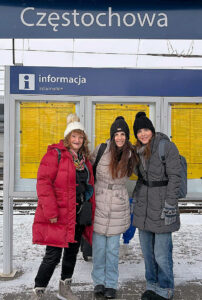 I arrived in Częstochowa on 2nd January 2026 for a particularly personal and moving journey of roots. This time, I was accompanied by my two daughters, Reut Levi and Limor David.
At the train station, we were met by Piotr Pałgan and Marcin Bocian, the local guides whom Alon Goldman recommended, and with whom I had planned the city tour.
We began the morning at the Częstochowa Jewish Museum, ul. Katedralna 8. Here, again, Alon arranged for the Museum to be opened especially for us. There, we received an explanation of the history of the Jewish community of Częstochowa. Among the many exhibits which were saw was the model of the New Synagogue, which was burned down by the Nazis.
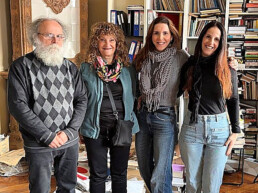
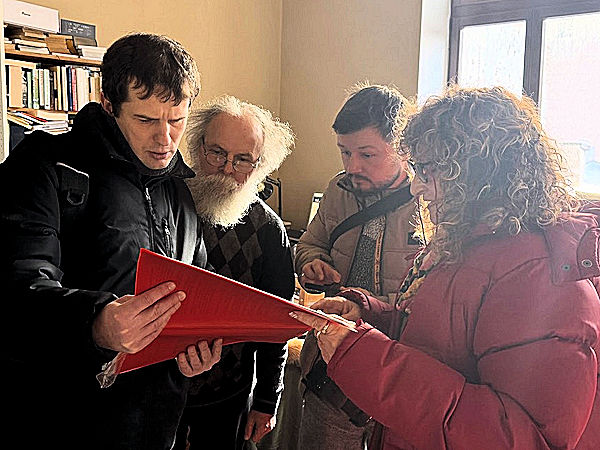
A particularly moving moment was when we met with historian Wiesław Paszkowski from the Centre for Historical Documentation. When I showed him the old photos in my possession, he was able to update us with information about my grandfather Henoch Frank. He told us that, in his research, he had discovered that Henoch Frank was a tombstone designer and that, in the cemetery, we could find the name Frank on many tombstones.
We continued to the bunker used for hiding at Stary Rink 24. There, we heard the story of Cwi Hersz Frajman who, during the liquidation of the “Big Ghetto”, saved his family by concealing them in the basement of the house for over two weeks.
From the Stary Rynek (Old Market Square), we walked through the old streets of the ghetto until we reached the house of my mother, Chaya (nee Frank), at ul. Garncarska 26 – sadly only ruins remained of the house. The day after my visit, Marcin Bocian managed to enter my mother’s building and succeeded in entering the basement. Beneath the rubble, he discovered various finds such the mark left by the mezuzah on the entrance doorpost, documents with my grandfather’s signature, glassware and more. This is the house from which my family members were sent to the Treblinka camp.
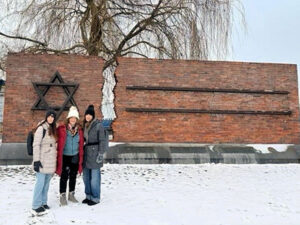 From the destroyed house, we continued to the Umschlagplatz, (pic left) from where the six transports to Treblinka left during the liquidation of the “Big Ghetto”.
The square is now named after Samuel Willenberg z”l, the Częstochowa Treblinka survivor who design the monument in the square, commemorating the Jews of Częstochowa.
We then drove to the Częstochowa Jewish Cemetery, which is just outside the city, to visit the grave of my grandfather Szlomo Wiślicki, who died in 1933. He was the father of my father, Yitzhak Wiślicki.
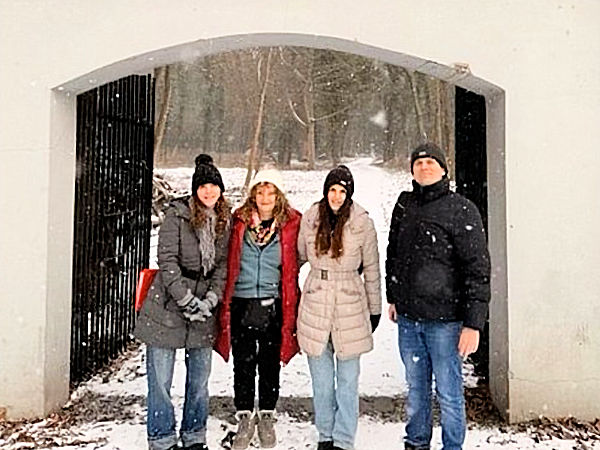
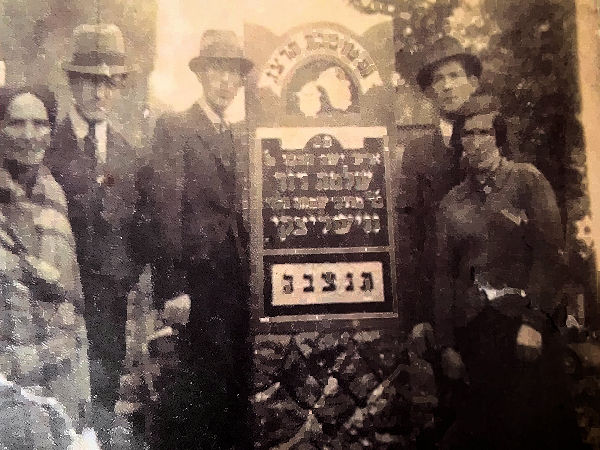
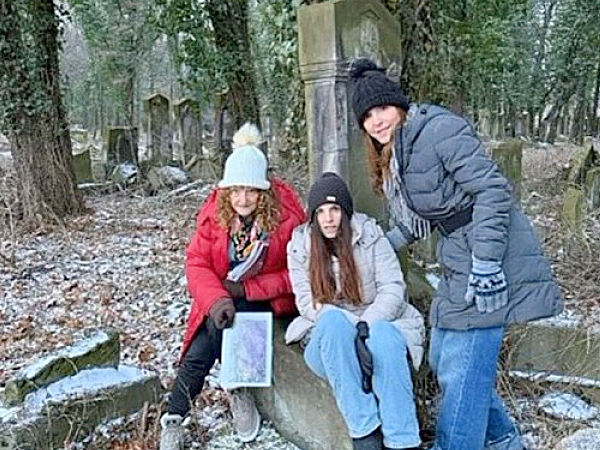
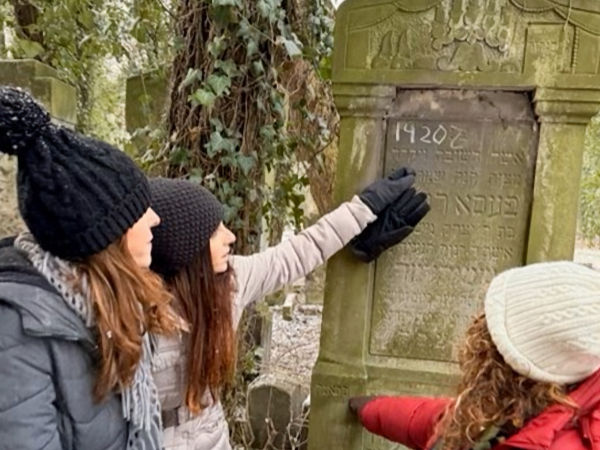
I had visited the cemetery many times. Each time, I was sad to see the place in its neglected state, wild vegetation covering a large section of the tombstones, bushes growing between the tombstones and making it difficult to pass, fallen trees and trees leaning on their sides and endangering the tombstones below them. This is a place, where those buried there, were part of the economic, social and cultural history of the city. Today, no one from the city cares for it. We found my grandfather’s tombstone broken, lying on the ground. We gathered around it in tribute to his memory, lit a candle and said a prayer.
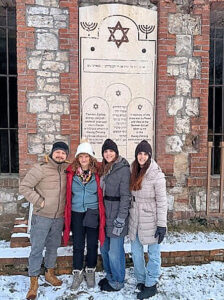 From the cemetery we went to the site of the HASAG-Pelcery forced labour camp.
This was where Jews from the ghetto were used as forced laborers in the production of munitions for the German war effort – a place where my parents were during the war.
There is a memorial plaque at the entrance gate (pic left) and, inside the camp site, Marcin Bocian gave us an interesting tour. Marcin is researching the place, collecting original exhibits related to the camp and has even set up a website.
I take this opportunity to thank Piotr Pałgan for his excellent tour and for taking the time to accompany us. Of course, thanks to Marcin Bocian, who added information about the HASAG and the documents he found – receipts signed by my grandfather Henoch Frank, a request for an ID card for my aunt Leah, who was sent, with her three-year-old daughter to Treblinka and who documented the visit with photographs.
Thank you, Alon Goldman, our dear friend, for setting us up.
This trip was a stunning experience, and my daughters were very excited. I was privileged to pass on the story of my roots to the next generation.
Read Shosh's story in Hebrew