
Częstochowa Jews in Israel Hold Annual Memorial Evening
aragorn
Source: Alon Goldman
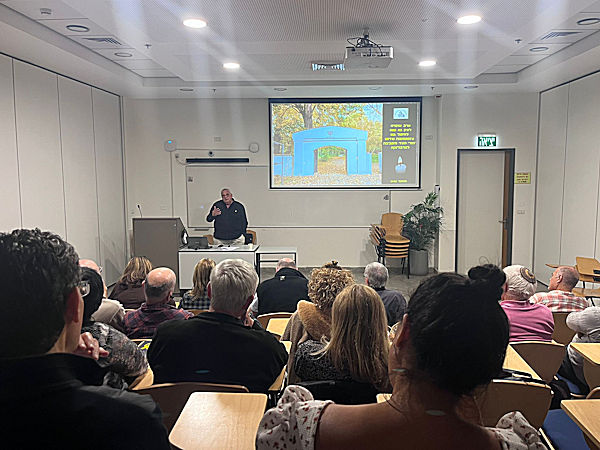
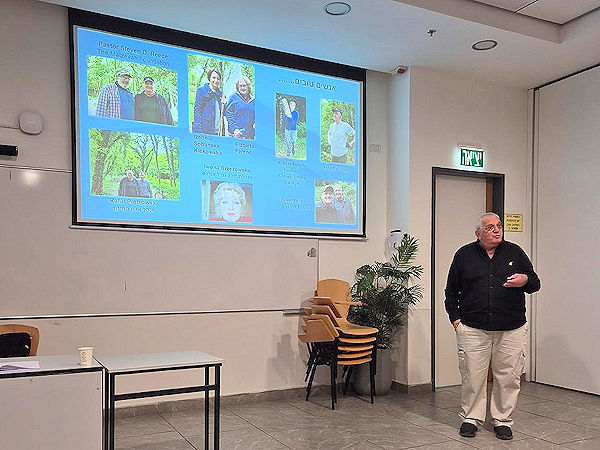
On Wednesday, 19th November 2025, around forty second and third generation descendants of Częstochowa Jews gathered for the Annual Memorial Ceremony, conducted by the Association of Częstochowa Jews in Israel, marking eighty-three years since the liquidation of the Częstochowa Ghetto and the deportation of approximately 40,000 Jews to their deaths in Treblinka.
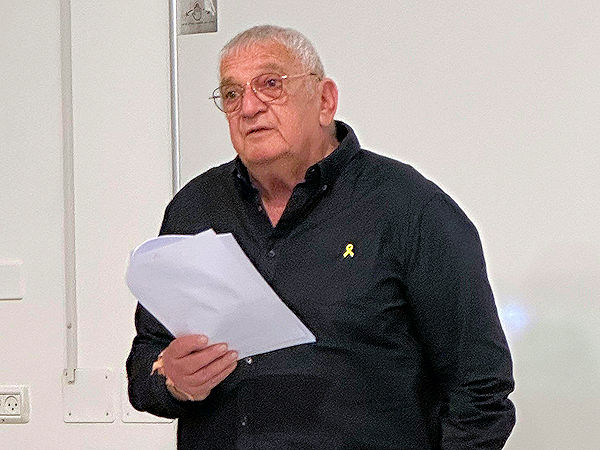
The event opened with remarks by Alon Goldman, Chairman of the Association of Częstochowa Jews in Israel. This was followed by the recitation of Kaddish by Steven Glaser, in memory of our relatives from Częstochowa who perished in the Holocaust.
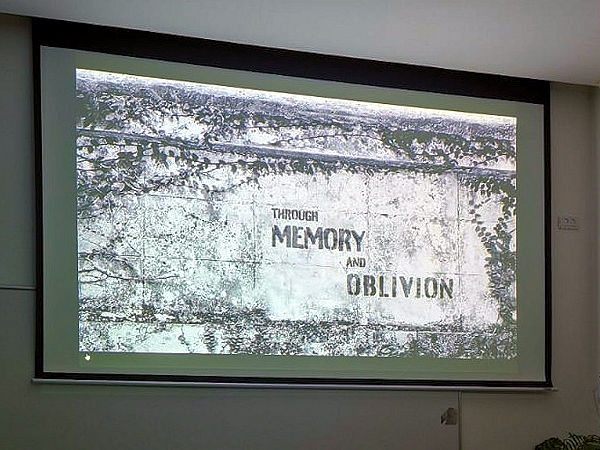
A recently released episode about Częstochowa’s forgotten Jewish history was then screened. It is from the new documentary series “The Road of Memory and Oblivion”, produced by the Polish public television channel TVP World. The global premiere of this episode aired in Poland just two days earlier. The series’ concept creator, producer, screenwriter, and director is Rafał Kotomski.
You can view the film using the following link (subtitles are available in Hebrew, Polish, and additional languages):
https://youtu.be/lynxysGjmTc?si=qlDevKPJr7SfnHJf
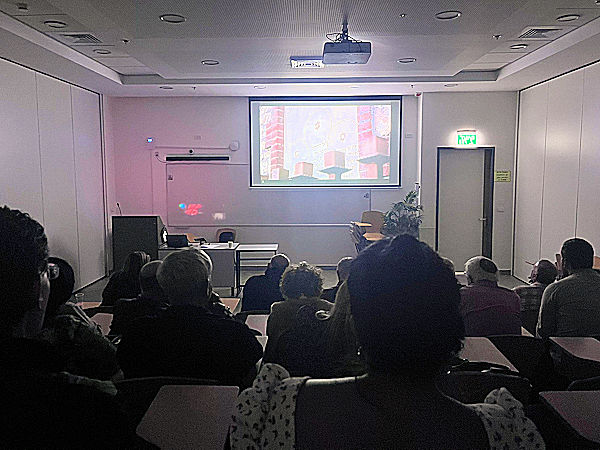
Following the screening, Alon Goldman presented an update on the current, deeply concerning condition of the Częstochowa Jewish Cemetery. He outlined the factors that have contributed to this situation, the challenges we face – including the unresolved legal status of the cemetery – and the steps we are taking, even without a legally recognised owner, to prevent its total destruction.
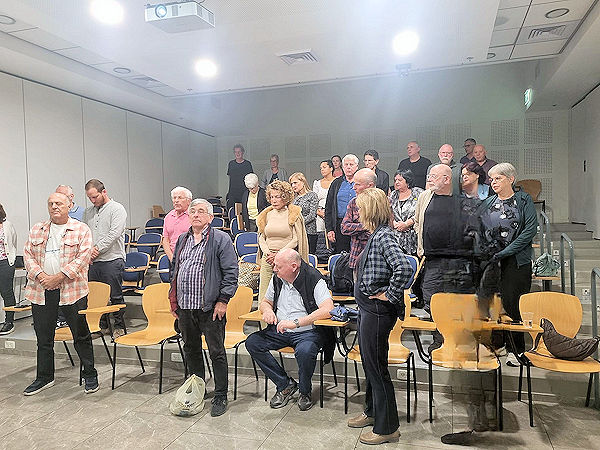
An open discussion then followed amongst the attendees. Many shared short, personal accounts of their families’ roots in Częstochowa. Amazingly, this exchange led to the discovery of previously unknown family connections between several attendees.
The evening then concluded with the singing of “Hatikvah”.

Israeli High School Students Clean Our Cemetery
aragorn
Source: Alon Goldman
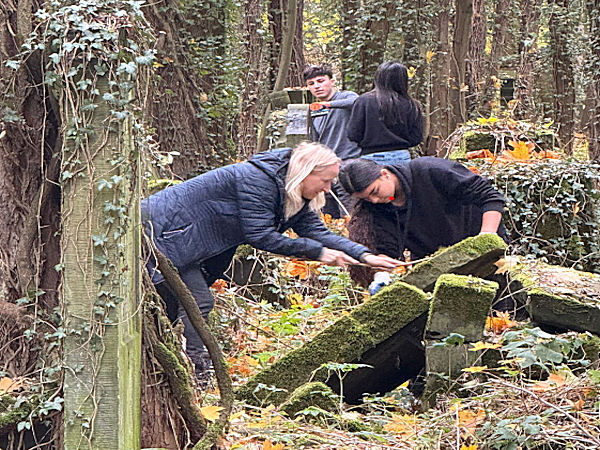
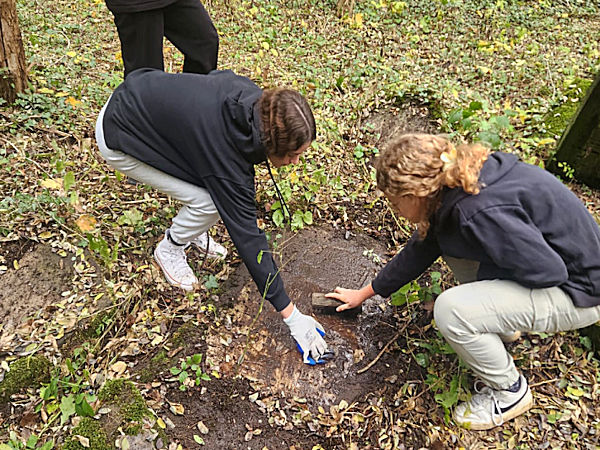
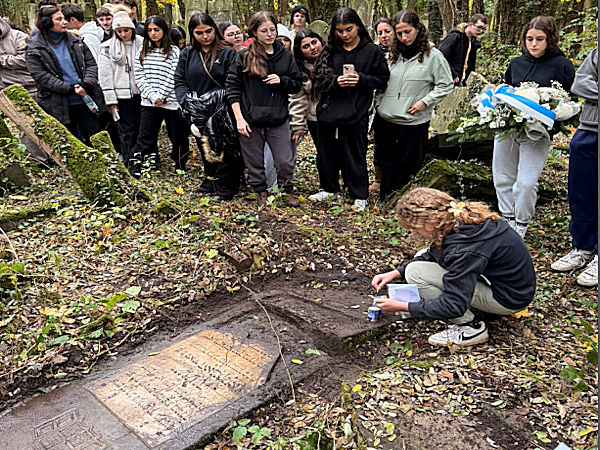
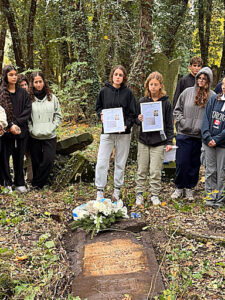 After finding the broken matzevah, covered in vegetation and dirt, Ruth and Gail cleaned it, all the students gathered around the grave and performed a short ceremony.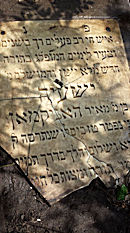
Marcin Bocian recorded a video of the students’ visit and of the twins’ discovery of their great-grandfather’s grave:
Local Częstochowa television, TV Orion, reported on the students visit to the Częstochowa Jewish Cemetery:
Częstochowa TSKŻ Commemorates 83rd Anniversary of the Beginning of the Częstochowa Ghetto Liquidation
aragorn
Sources: Izabela Sobańska-Klekowska, Agnieszka Małasiewicz
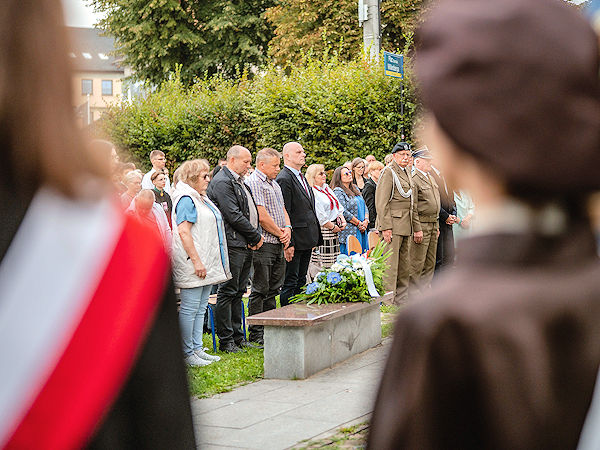
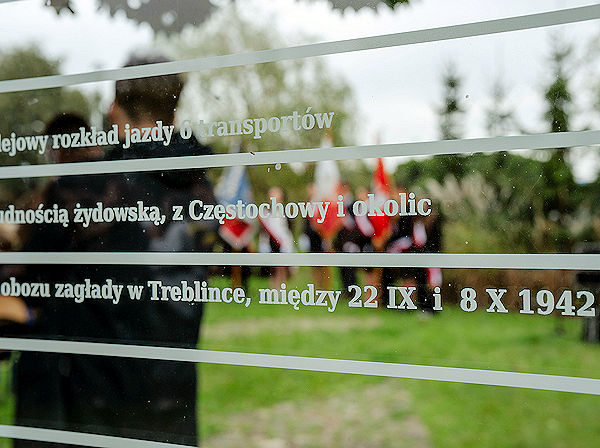
The Częstochowa branch of the TSKŻ commemorated the 83rd anniversary
of the beginning of the liquidation of the Częstochowa Ghetto
by organising a ceremony at the Częstochowa Jewish Memorial.
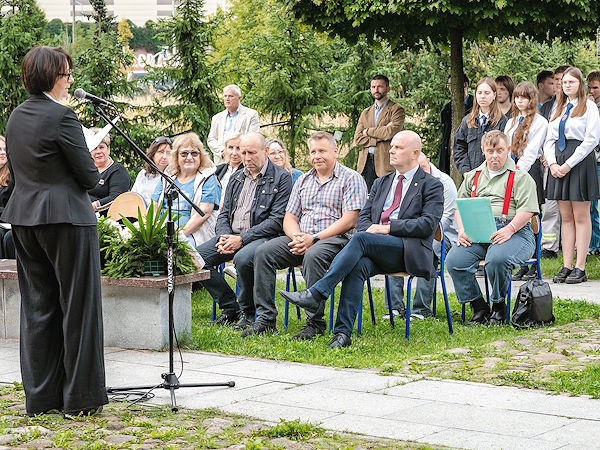
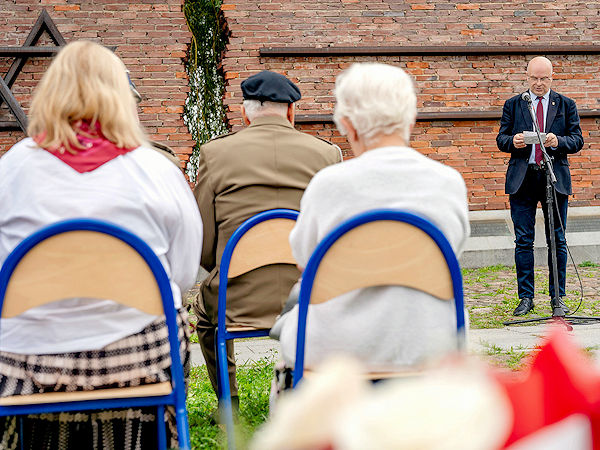
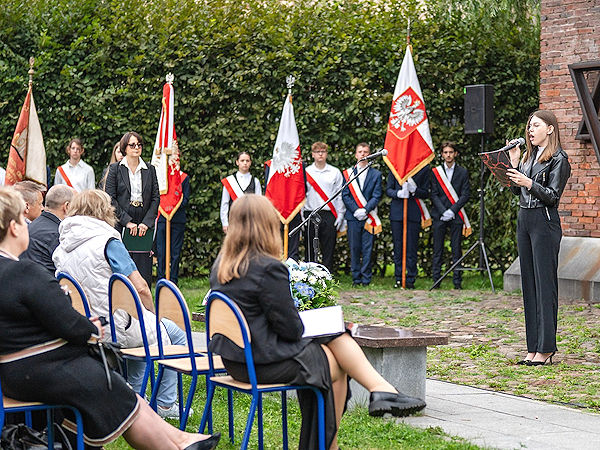
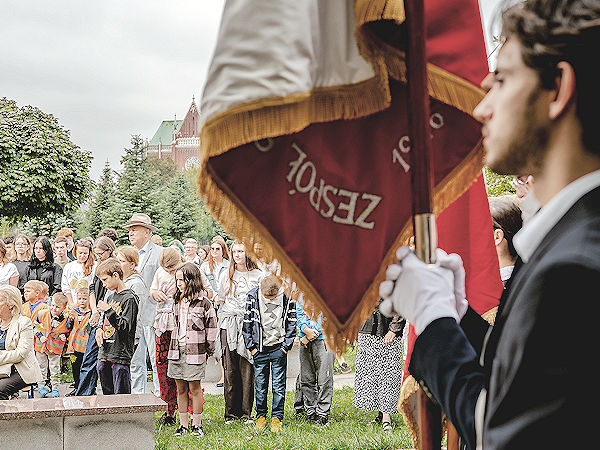
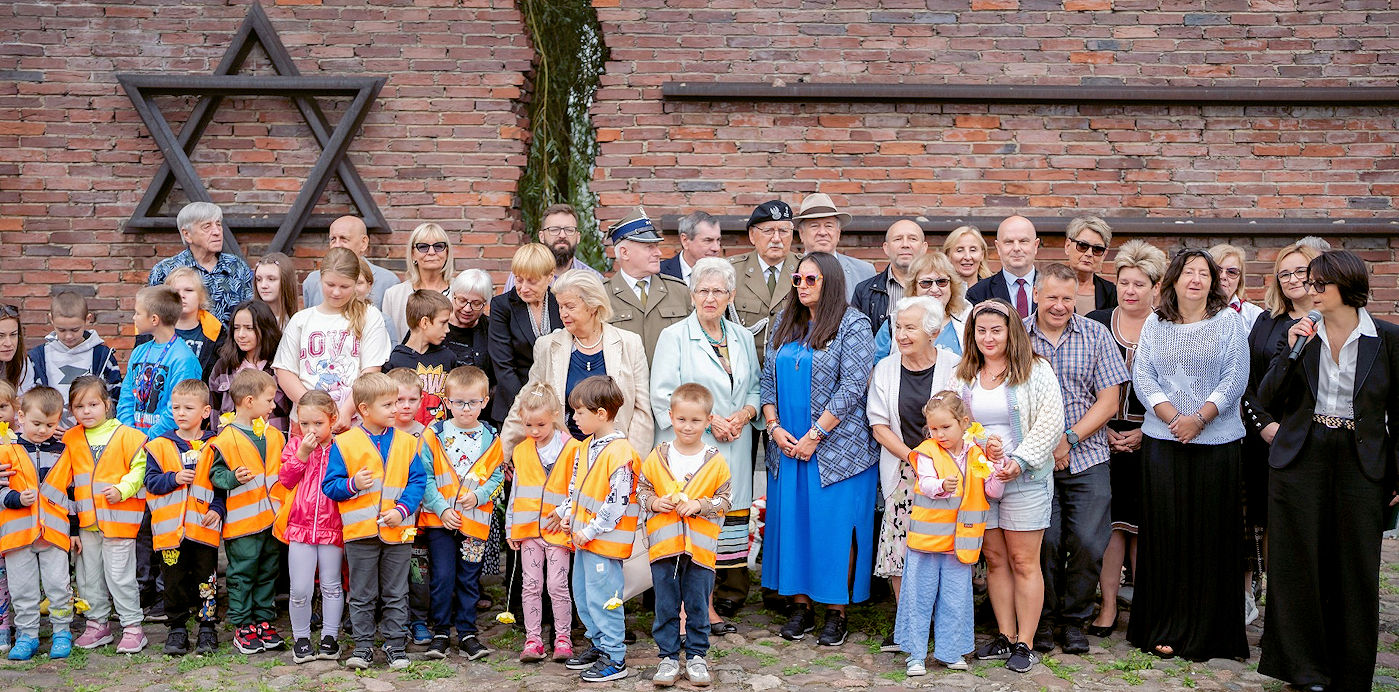
The ceremony was led by Częstochowa TSKŻ Chair Izabela Sobańska-Kleklowska.
Those present included Częstochowa Deputy Mayor, Ryszard Stefaniak, Częstochowa Museum Director, Katarzyna Ozimek, Director of the Częstochowa Museum, Director of the Częstochowa Regional Cultural Centre Director, Małgorzata Majer-Sęstowska, directors and professors of Częstochowa schools with banners, students from secondary schools, primary schools and pre-schoolers came in large numbers.Also present were members of the Old Town-New Life Partnership, the President of the Adullam Christian Foundation, the Pastor of the Word of Faith Church, the Democratic Association of the Republic of Poland, the city guard, the media, representatives of the Polish Army Soldiers’ Association, Museum employees, members of the Jewish community gathered in the TSKŻ and the Descendants of the Righteous.
All those gathered commemorated the victims of the ghetto with a minute of silence, followed by the laying of flowers, lighting of candles and placing traditionally symbolic stones at the monument..
Israeli High School Students Clean Our Cemetery
aragorn
Source: Alon Goldman
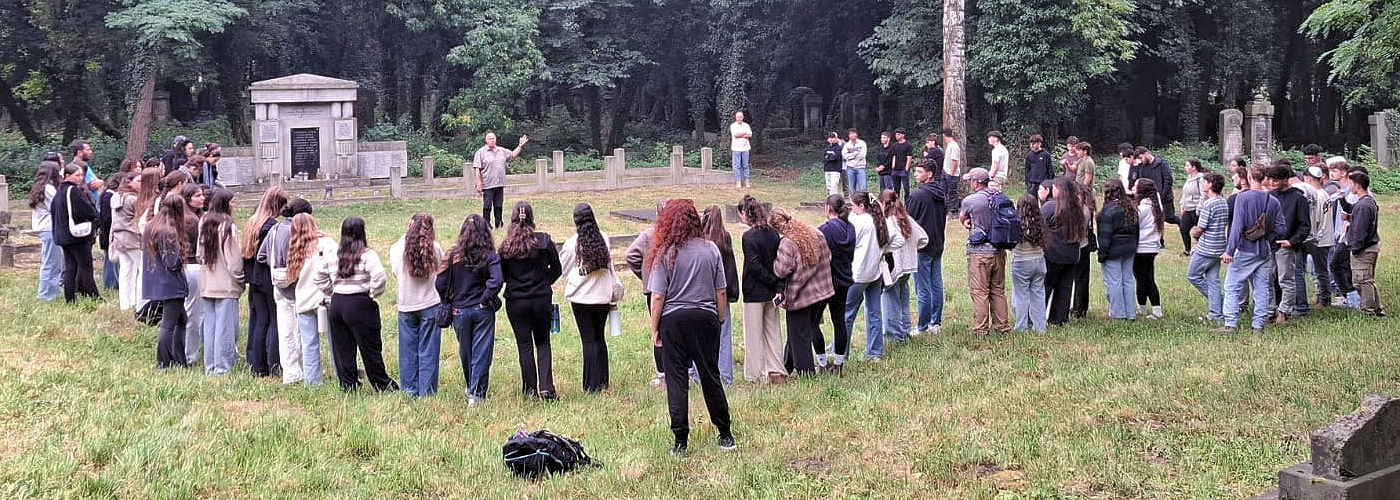
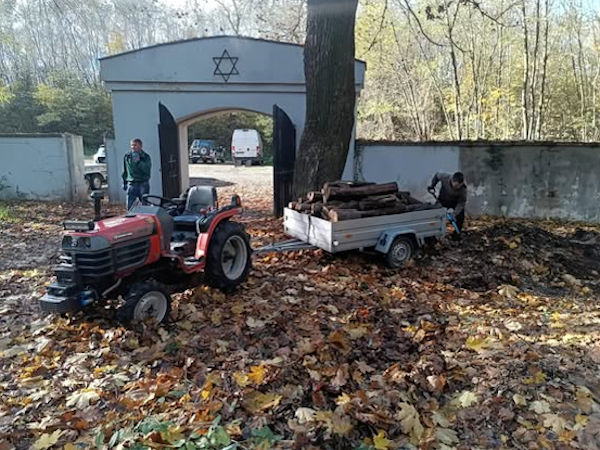
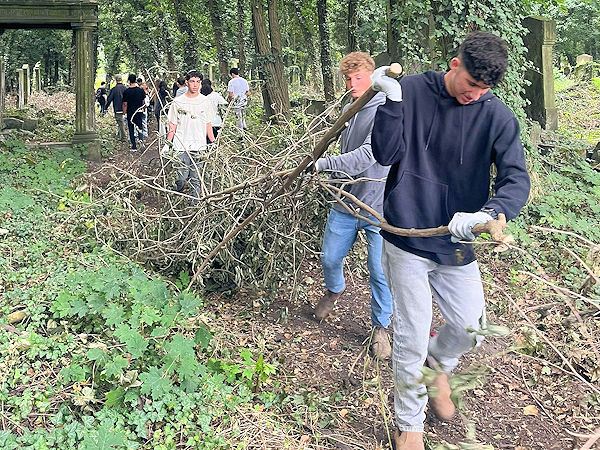
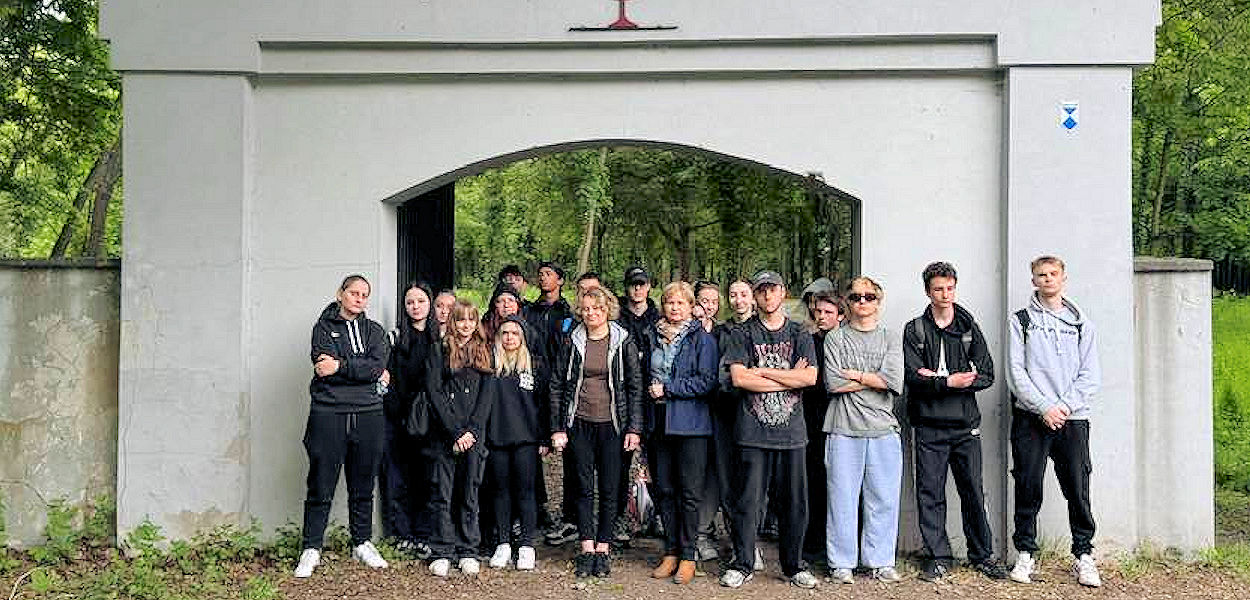
Eighty Eitan High School students from the Israeil’s Gezer Regional Council of Israel visited our Częstochowa Jewish Cemetery. After learning a little about its history, they volunteered to help in the cemetery cleaning work.
World Society friends, Krzysztof Straus, Elżbieta Ferenc and Robert Kamela were on site to help coordinate the activity.
After about half an hour of instruction about the cemetery, the Mass Graves and the grave of those murdered in the Kielce pogrom, the students began the cleaning work and, after an hour, cut tree trunks and branches were piled up on the path, waiting to be shredded or removed. In order to maximize the effectiveness of the students’ working time, professional loggers, hired by us, went to work several days before the students arrived and cut down bushes and fallen tree trunks so that the students could focus on removing vegetation from between the rows of graves and bring them to the central pathway.
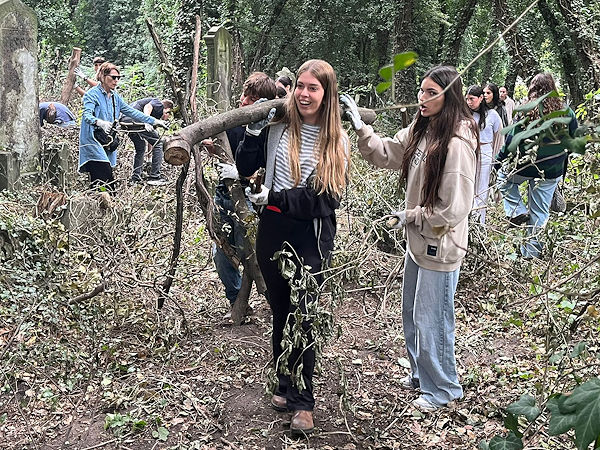
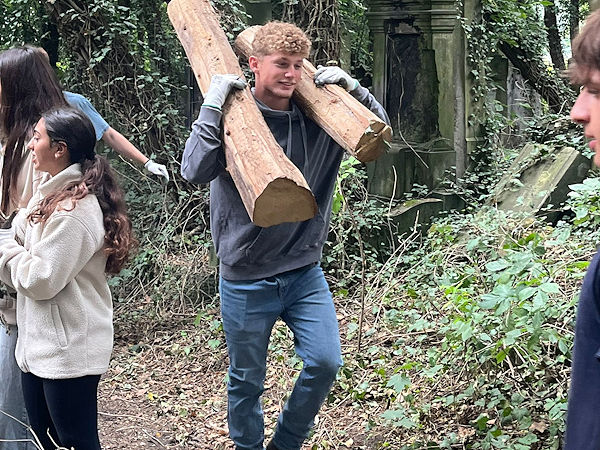
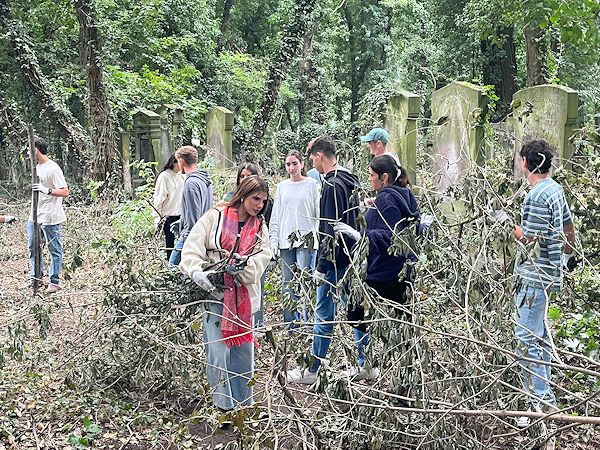
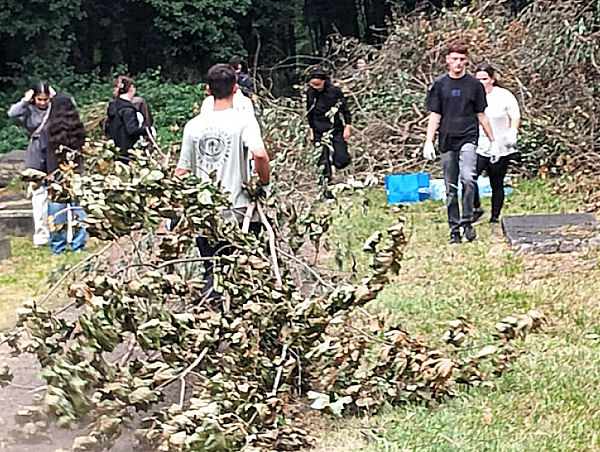
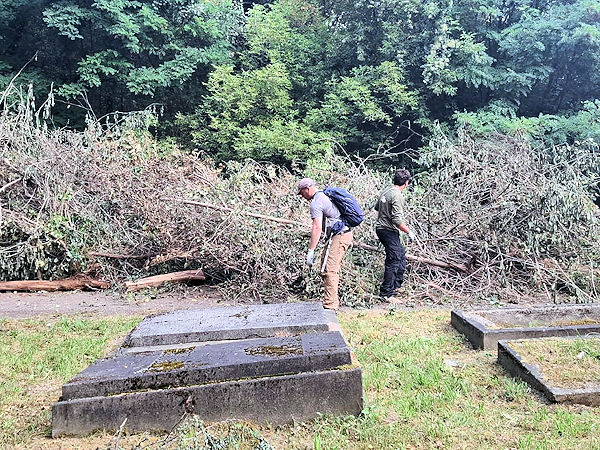
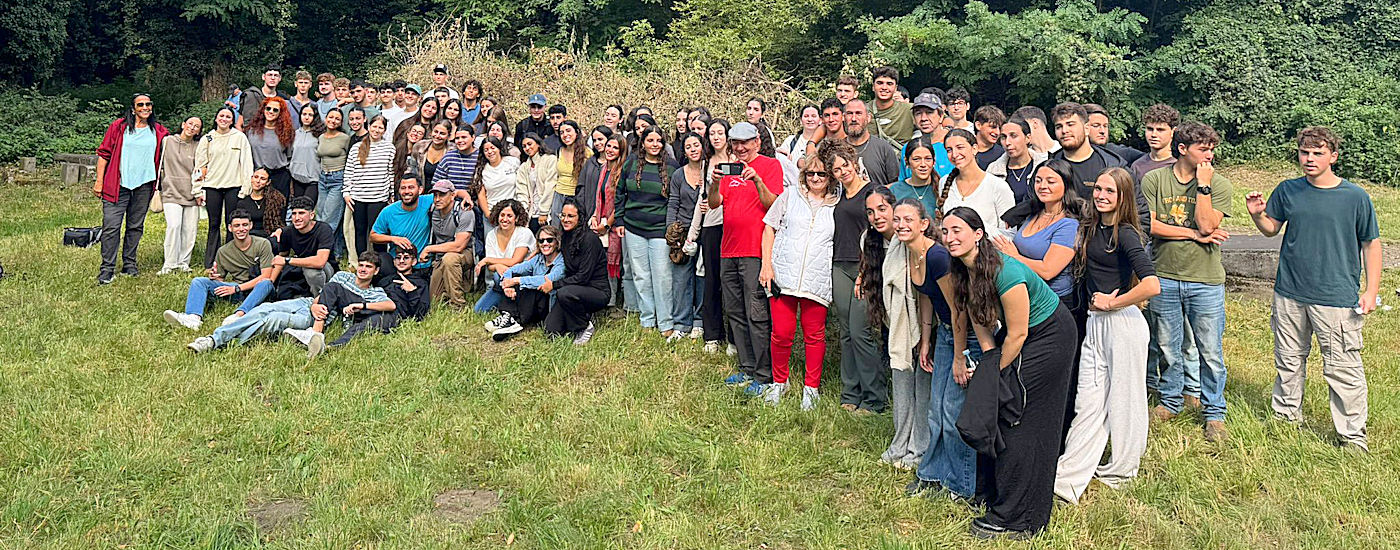
Thank you to the students of Eitan High School, to our World Society friends Elżbieta, Robert and Krzysztof, as well as guides Erez and Yuval.
Without you this work would not have been possible
Maccabi Haifa FC Visit Częstochowa
aragorn
Source: Alon Goldman
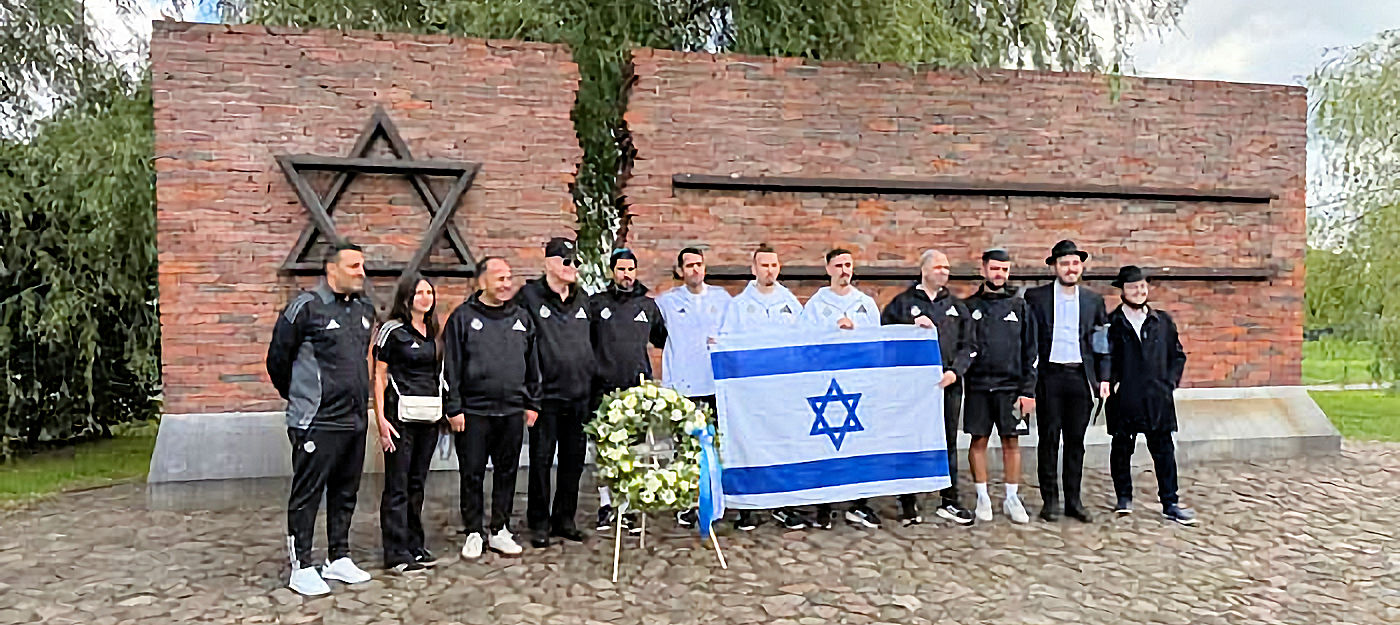
 Israeli Ligat Ha’al club, Maccabi Haifa FC, have come to Częstochowa to, tonight, play local Polish Ekstraklasa club, Raków Częstochowa, in the first leg of the third round of UEFA Europa Conference Qualification.
At the beginning of the week, World Society Vice-President Alon Goldman received a request to assist the Israeli club’s management, who were interested in placing a floral wreath at the Częstochowa Holocaust Memorial.
In response to Alon’s request, the Częstochowa municipal authorities ensured that the square and the memorial area were cleaned and that any overgrown vegetation would be cleared, such that the site would be appropriate and respectful for an event.
At 11:00am yesterday, a ceremony took place during which the Maccabi Haifa FC management and players laid a floral wreath at the Memorial. A prayer was recited and the Israeli guests were informed of the Holocaust of Częstochowa Jews and of the significance of the Częstochowa Umschlagplatz where they were standing.
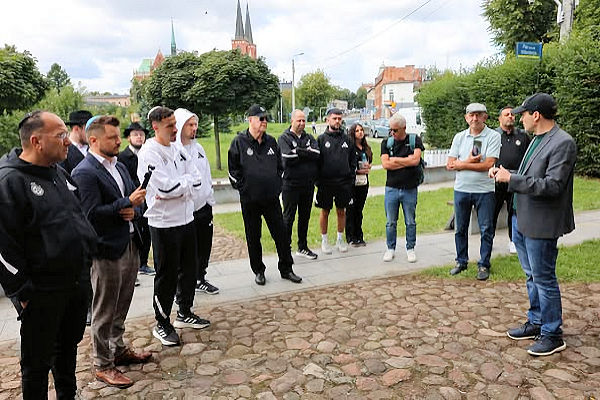
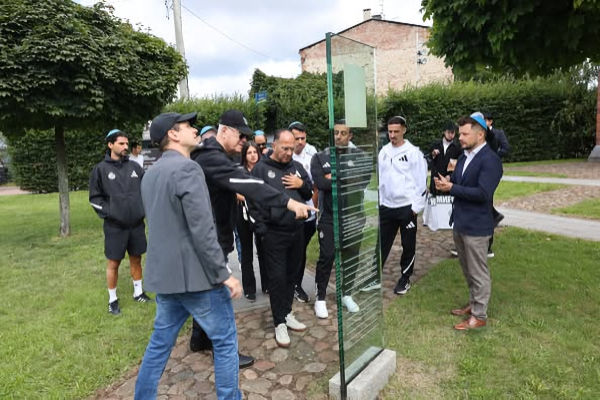
This is how local Częstochowa Orion TV covered the event (in Polish):
This is how World Society friend, Marcin Bocian, filmed the event (in English and Hebrew):
The World Society sincerely thanks our friends Krzysztof Straus, Piotrek Pałgan and Marcin Bocian
who enlisted Alon Goldman’s help to make this visit a success.
2025 Częstochowa Jewish Cemetery Clean-Up is Done
aragorn
Sources: Alon Goldman, Asia Sidorowicz, Pawel Kulig, Kasia Ryś, Piotr Merenda, Szymon Browarski
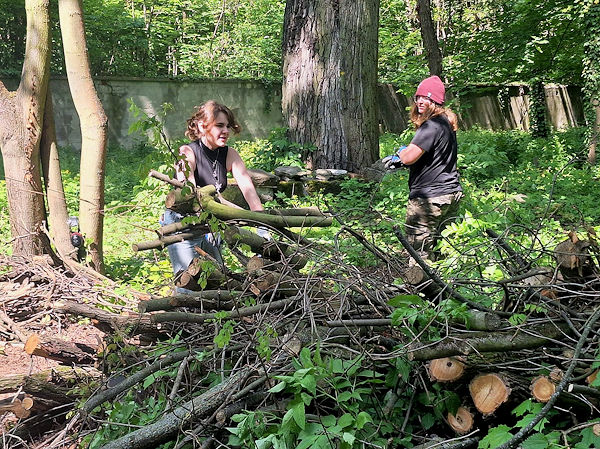
On an almost annual basis, Alon Goldman, Vice-President of the World Society of Częstochowa Jews & Their Descendants and Chairman of the Association of Częstochowa Jews is Israel, has organised and led a clean-up of the Częstochowa Jewish cemetery. Over time, Alon has been joined by volunteers from various organisations, both adults and young people in this holy work.
DAY 1: Wednesday, 21st May 2025
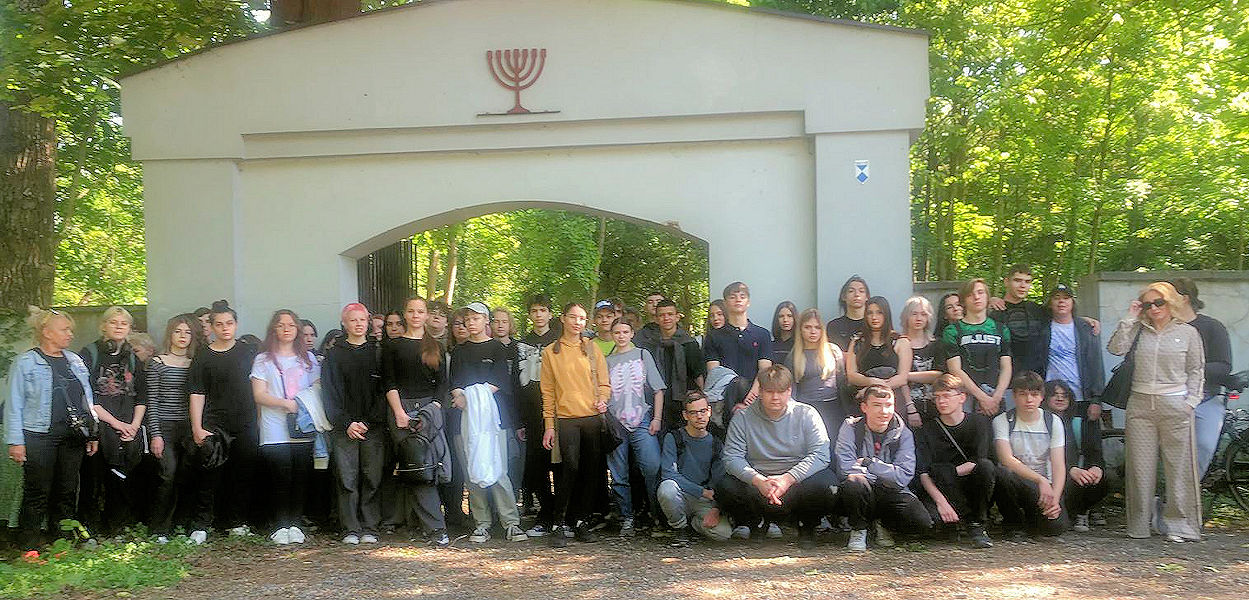
The preparations are over and this morning we started the first day of work. The weather smiled on us today.
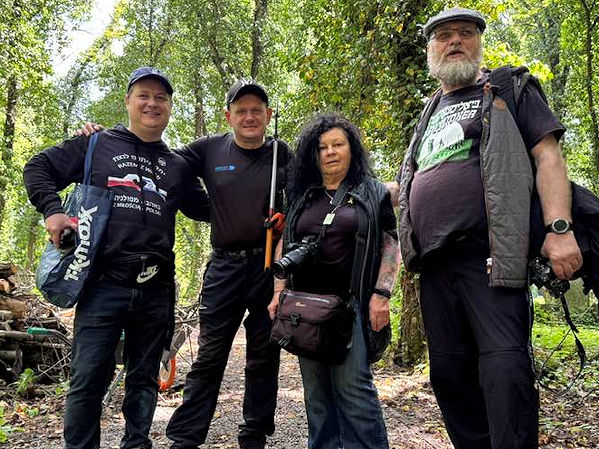
As every year, the Adullam Foundation from Częstochowa (Fundacja Chrześcijańska Adullam) and its director, Elżbieta Ferenc, have joined our work. On each of the five working days, 8-10 of their volunteers take care of all the logistical arrangements.
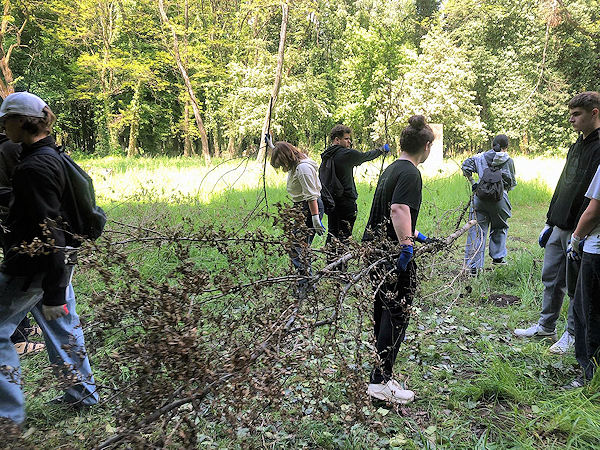
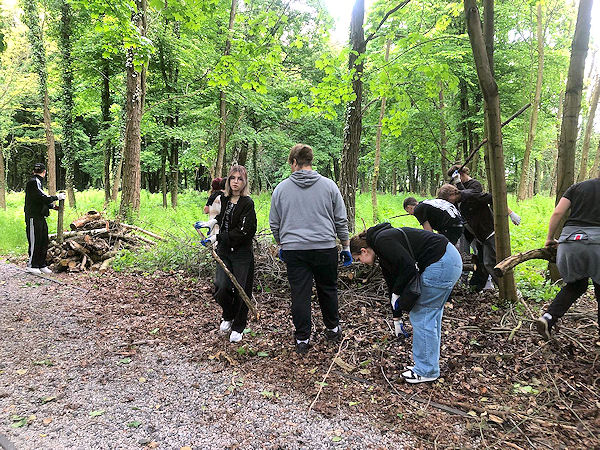
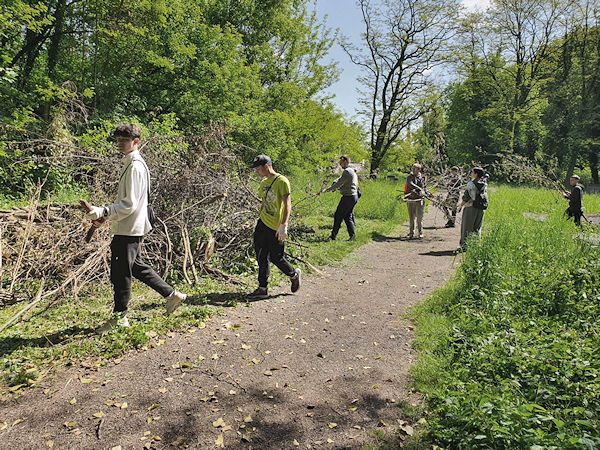
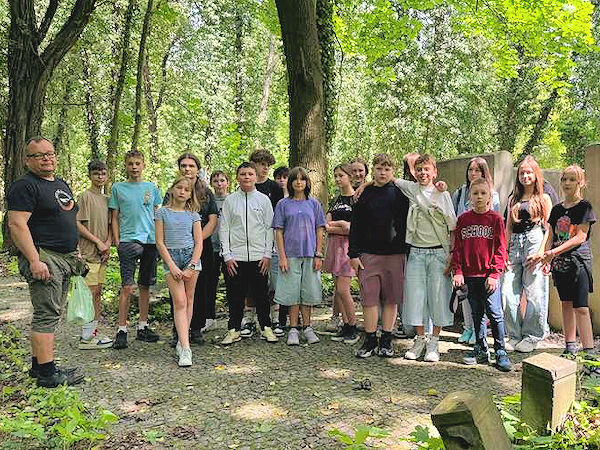
Today, they were joined by about forty students from General Anders High School in Częstochowa. A senior school teacher, Kasia Ryś, said that “for the students, working at the cemetery was a great experience. It was an opportunity to learn about the cemetery’s history as an integral part of our city. The young people also had the opportunity to show their commitment, which contributes to restoring this place to its former glory”.
Our friend Pawel Kulig, from the Guardians of Memory (Strażnicy Pamięci) also helped with today’s work. He has extensive experience in cleaning Jewish cemeteries, due to his work at the Jewish cemetery in Łódź.
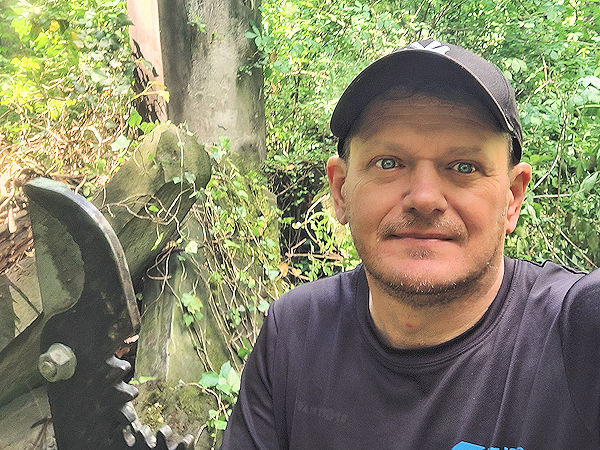
Throughout this year’s cleaning, the work is overseen by our friend Robert Kamela from the Adullam Foundation.
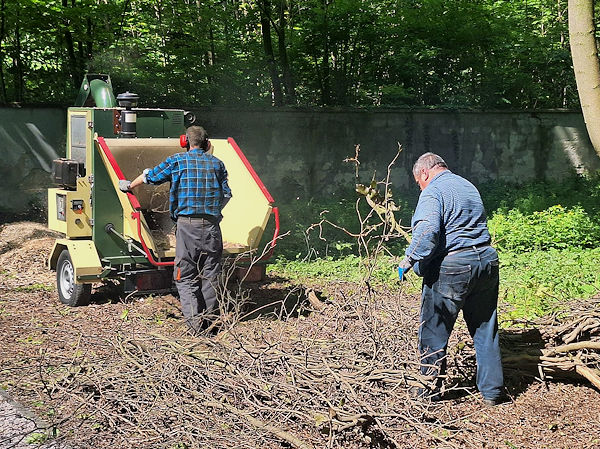
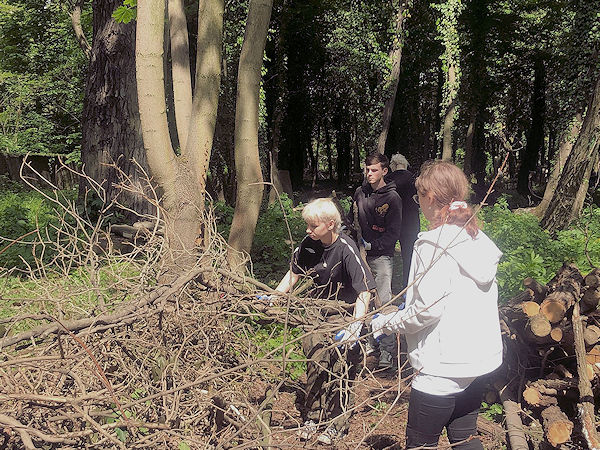
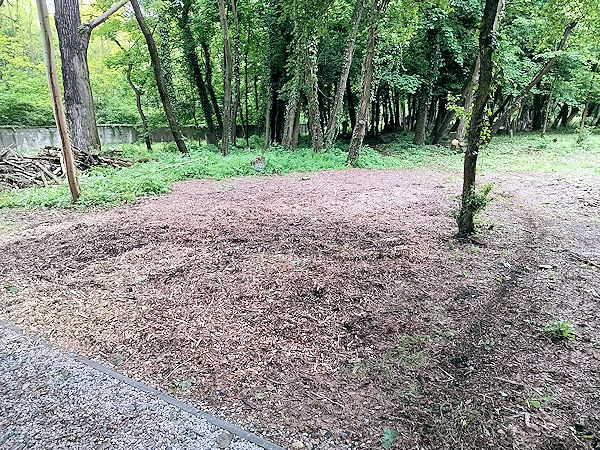
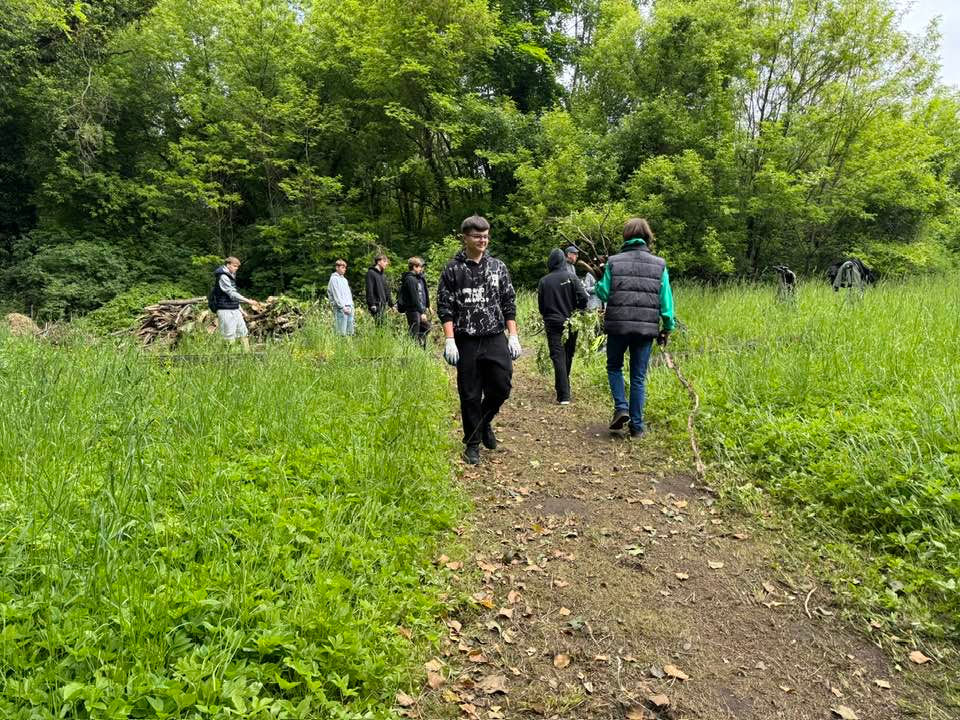
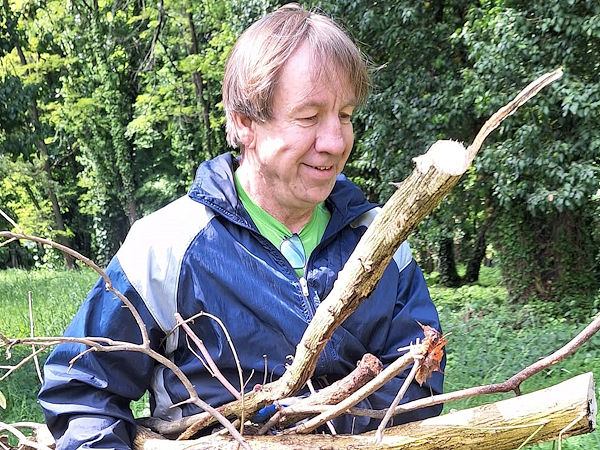
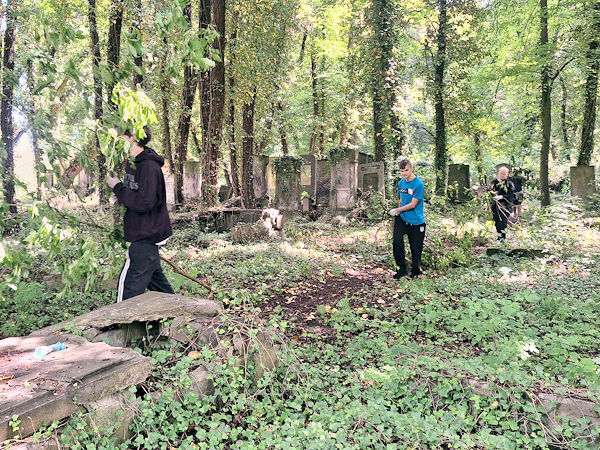
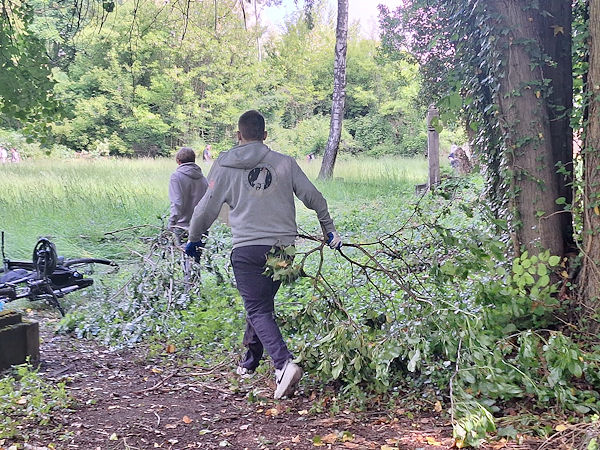
The work focused on removing fallen or overturned tree trunks, which were cut down a few weeks ago by professional loggers, and on moving bushes and branches to the shredder.
During the day, we were surprised to discover that, despite the neglect, there is interest in the cemetery – a class of students from Elementary School No. 3 from Kiedrzyn near Częstochowa came to visit the Cemetery, as did historian Wiesław Paszkowski with a group of Częstochowa retirees.
DAY 2: Thursday, 22nd May 2025
The second day’s work ended successfully today and, like yesterday, the weather was again kind to us.
Today, the volunteers from the Adullam Foundation (Fundacja Chrześcijańska Adullam) were joined by students from the Częstochowa Economic Schools Complex (Zespół Szkół Ekonmicznych w Częstochowa).
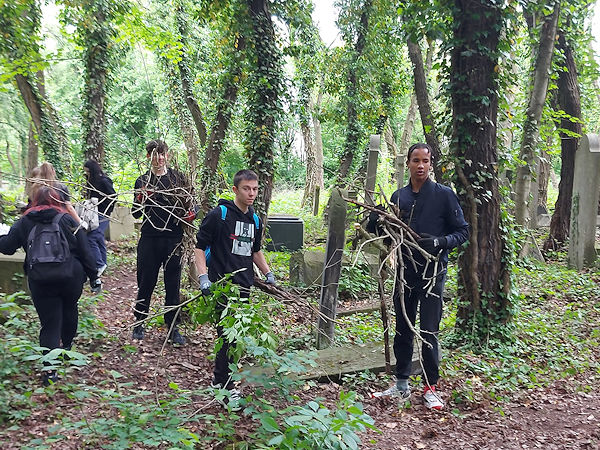
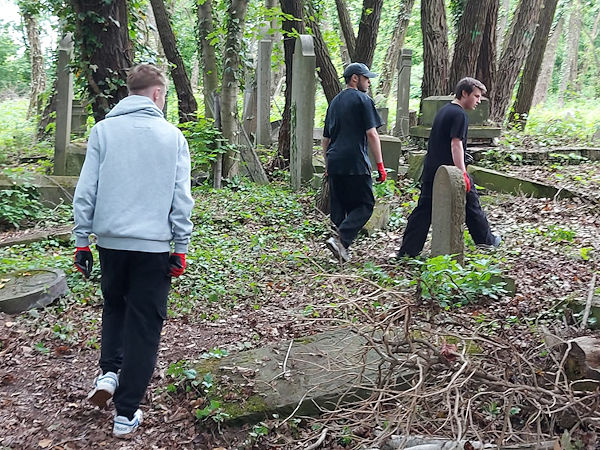
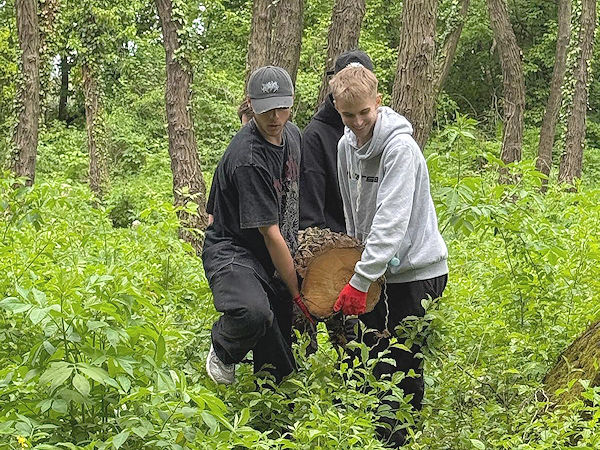
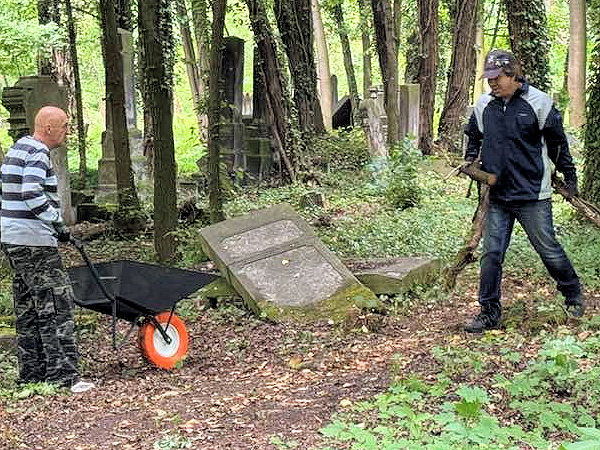
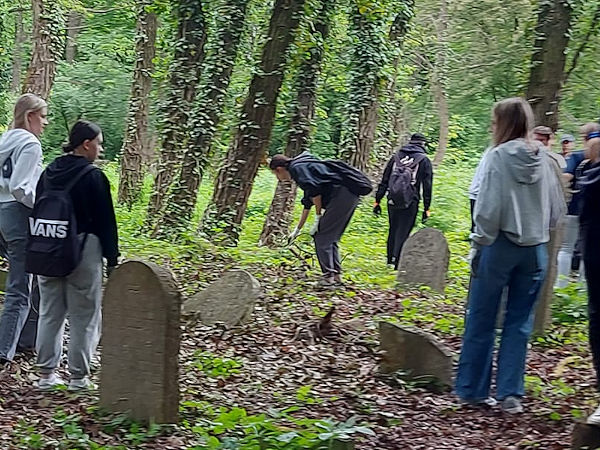
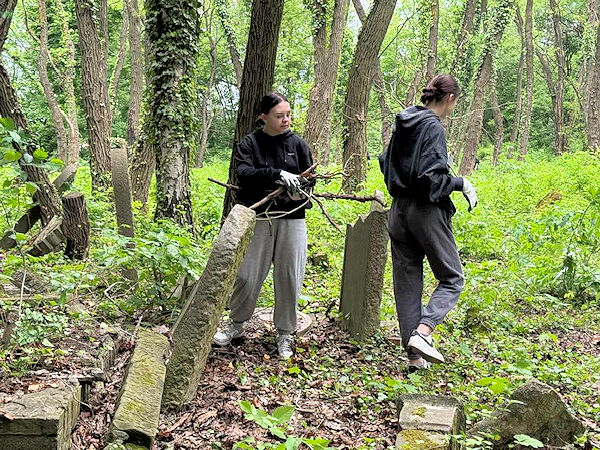
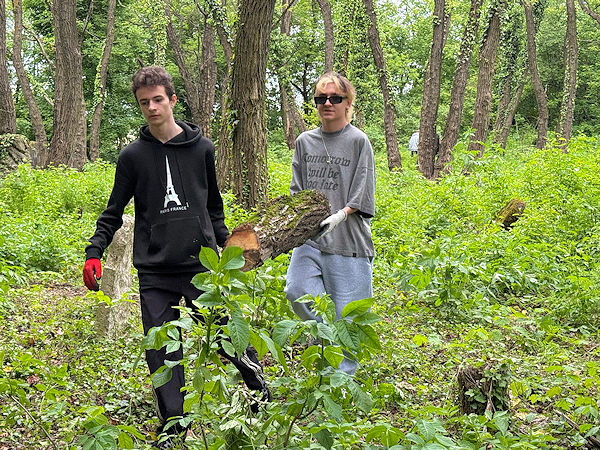
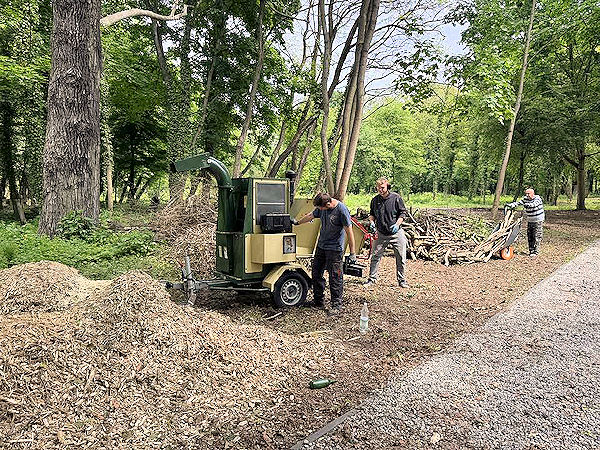
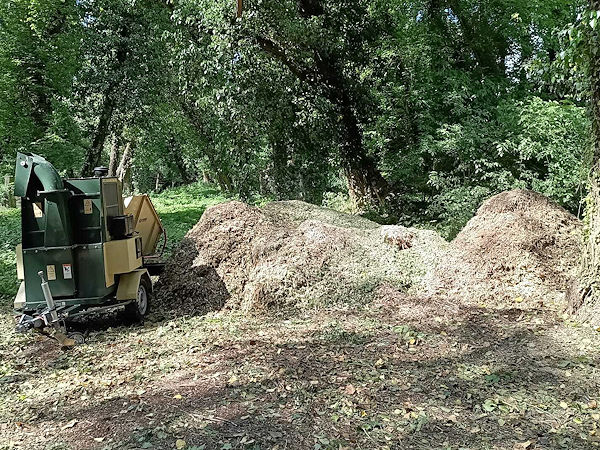
The students and volunteers were busy removing tree trunks, which had been cut down a few weeks ago by professional loggers, taking the branches and bushes to the shredder,which we have rented for the work, and to the path from which they will be removed at the end of the work.
DAY 3: Friday, 23rd May 2025
Today,about sixty-five volunteers from the Adulam Foundation (Fundacja Chrześcijańska Adulam) were joined by students from the Bolesław Prus Vocational High School. They continued working on the previously prepared plots, taking the felled trees, bushes and branches out onto the path for clearing and shredding.
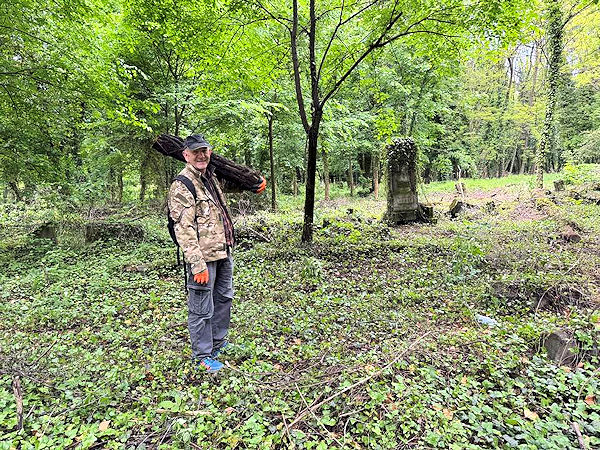
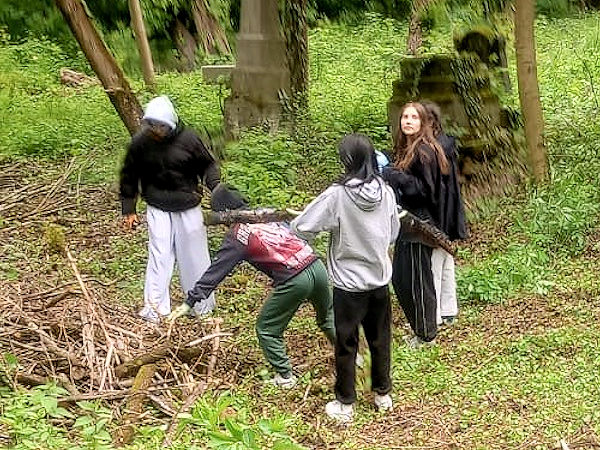
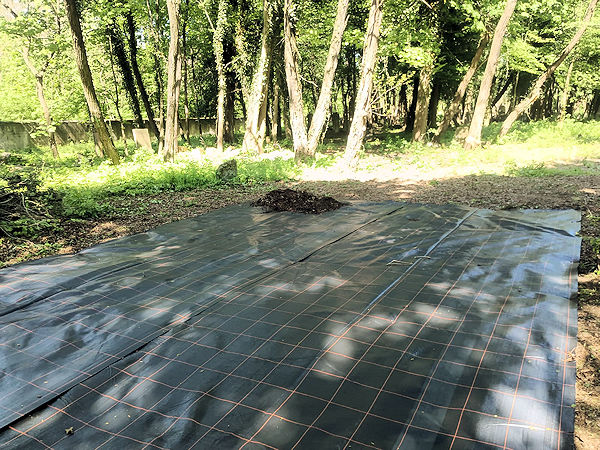
In a plot of about 100 square meters, we’re conducting an ecological plant control experiment, without the use of chemicals. Ecological sheets were covered with shredded branches. In a few months, we will find out whether this is a solution for the control of wild plants in open areas and between the tombstones.
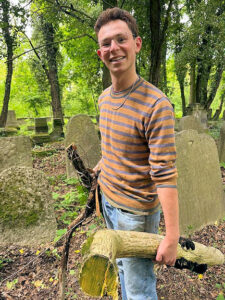 Today, Uri Heller, a young Israeli who is currently in Warsaw, the grandson of Holocaust survivor Dr. Irena Talmon nee Bugajer z”l from Częstochowa, came to the city to research his roots and also joined in the work.
During the work, and with the assistance of Izabela Sobańska-Klekowska, the chair of the TSKŻ branch in Częstochowa, he also managed to find graves of his family members (Bugajer and Hatka) in the cemetery.
A film about the story of his grandmother’s miraculous rescue was screened several years ago at the Documentary Film Festival in Częstochowa and in Israel. I hope that, with the assistance of the family, it will soon be available for viewing online.
DAY 4: Monday, 26th May 2025
For a while, today, we thought that the rain that fell in the morning would stop the cleaning work. However, as the time approached for the work to begin, the rain stopped and the sky began to clear.
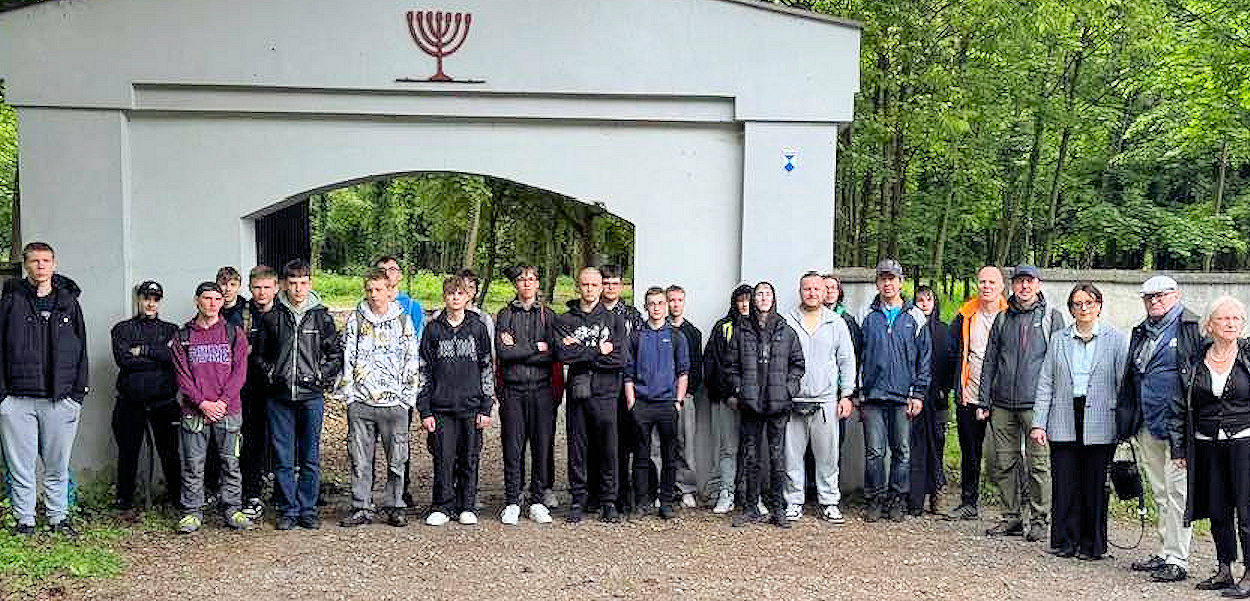
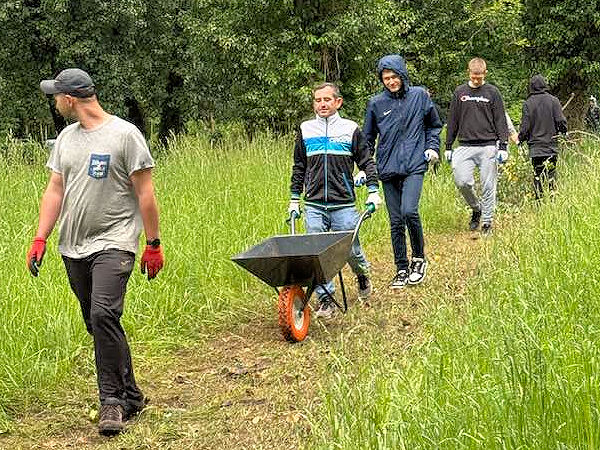
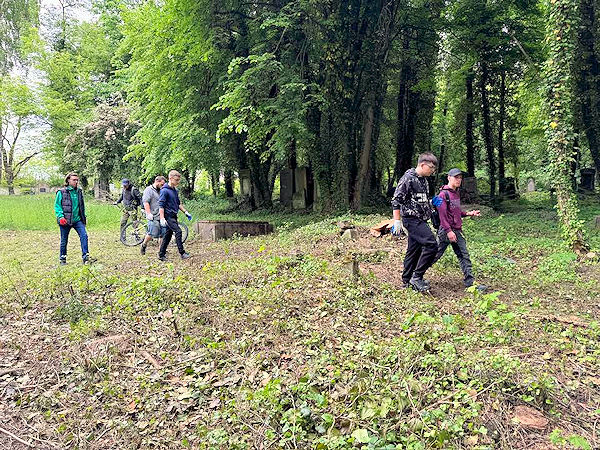
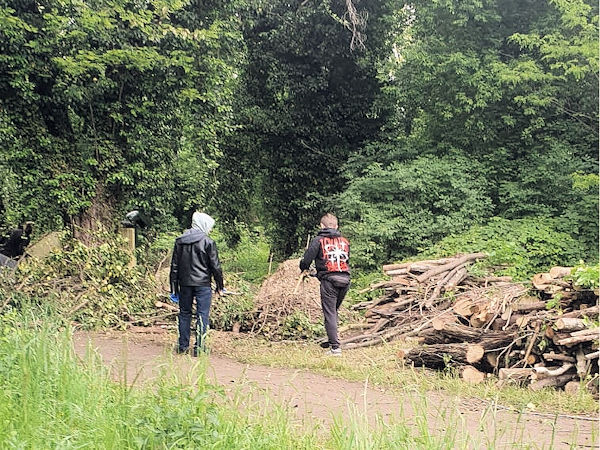
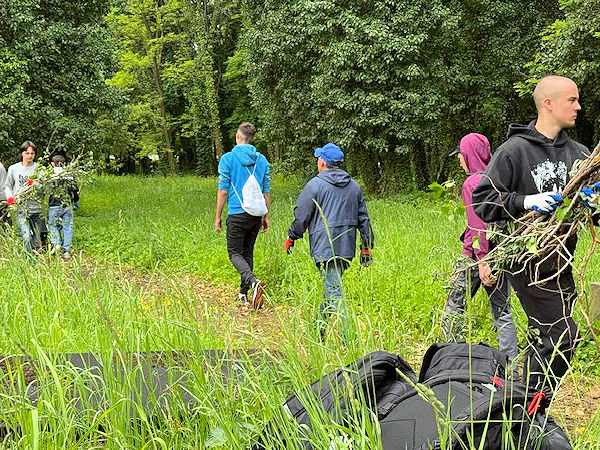
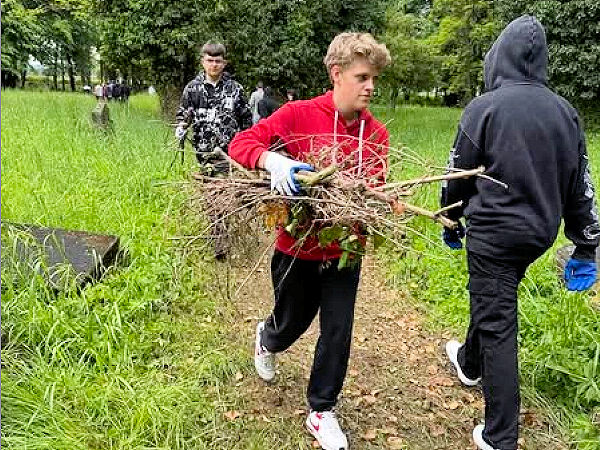
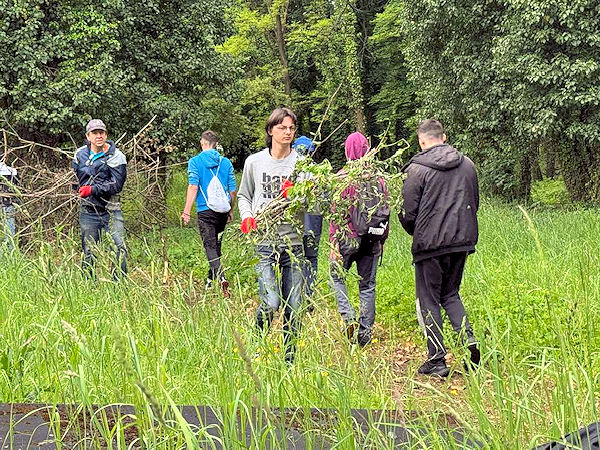
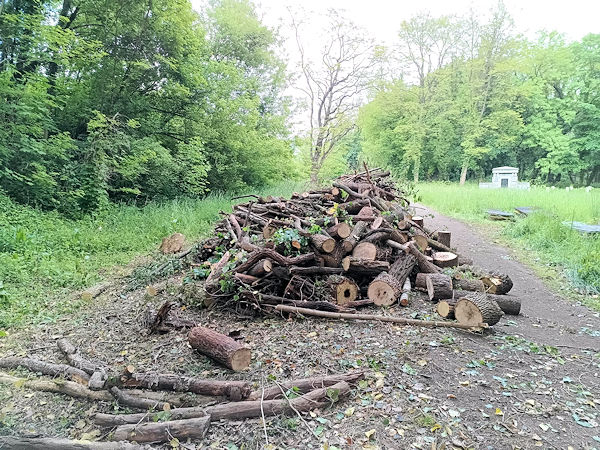
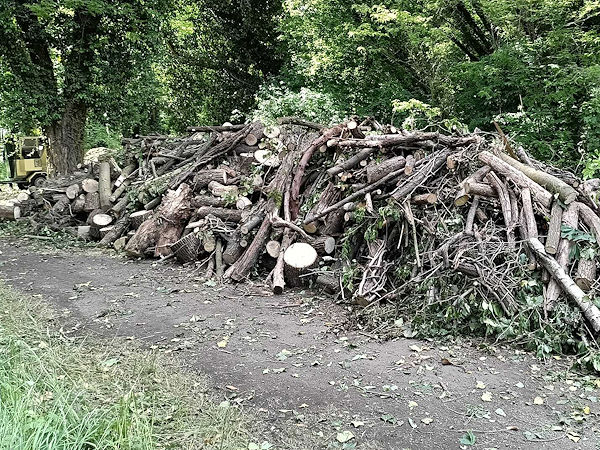
Today, the volunteers from the Adullam Foundation (Fundacja Chrześcijańska Adullam) were joined by students from the John Paul II Technical High School. Together, they worked non-stop, continuing to clear the area where we had carried out the preparatory work. The piles of trunks and branches, next to the path, kept growing. The branch shredder was working non-stop and, slowly, we begin to see the areas that had been hidden by dense vegetation.
DAY 5: Tuesday, 27th May 2025
Today is the fifth and final day for 2025 of the concentrated cleaning week of the Częstochowa Jewish Cemetery.
Volunteers from the Adullam Foundation (Fundacja Chrześcijańska Adullam) were joined, today, by students from the Częstochowa Kazimierz Pułaski High School of Mechanics and Electricity.
Today, work continued on the plots where professional loggers and the Nissenbaum Foundation work group had prepared the area in advance. The students were busy taking the felled tree trunks and branches onto the path for shredding and removal.
Szymon, the shredder operator, and his assistant, worked non-stop and, by the end of the day, finished shredding all the branches and only piles of shredded material remained for removal from the cemetery grounds.
Throughout the week, we enjoyed good weather, which allowed us to carry out the work without interruption. The results can be seen in the growing piles of logs and branches along the path and in the areas that are beginning to be revealed after years of having been hidden by dense vegetation.
Due to the extensive preparatory work carried out, the volume of our output this week was quite extensive. But there were still many felled logs and branches in the area to be removed,. We hope that the Częstochowa TSKŻ will continue the effort and organise volunteer days to complete the cleanup work.
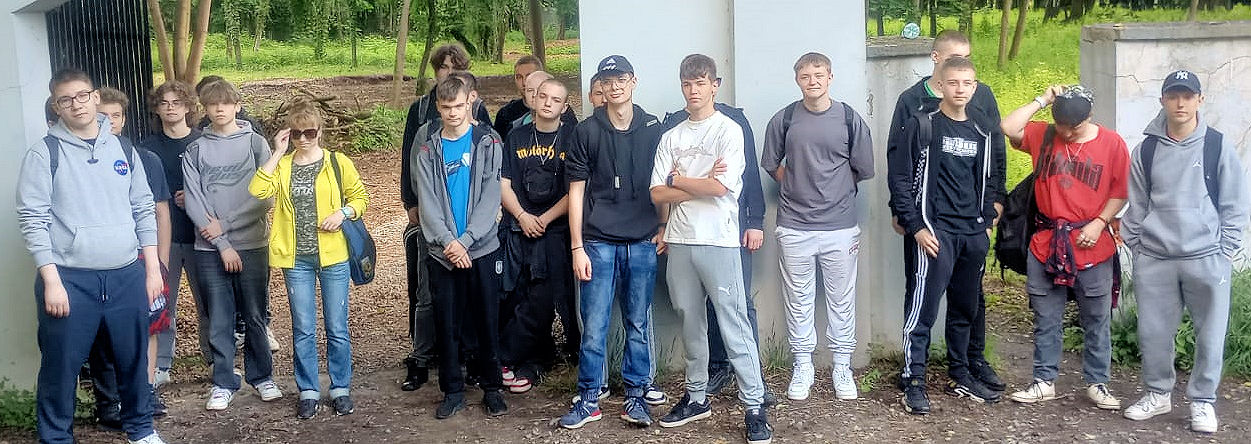
As this was the final day of our 2025 clean-up, it’s appropriate to thank many people:
- our World Society Vice-President, Alon Goldman
- Elżbieta Ferenc, Director of the Adullam Foundation, for mobilising and organising its volunteer group, for caring, storing and maintaining our work tools from year to year and for supporting all the logistical aspects of the work.
- the team of volunteers from the Adullam Foundation – hardworking people with huge hearts
- Robert Kamela, of the Adulam Foundation, who in Alon Goldman’s absence, managed all the work at the cemetery, managed the Adulam Foundation volunteer team and the students, worked non-stop each day and contributed greatly to the success of the work
- Rafał Piotrowski, head of the Częstochowa Municipal Education Department, for his cooperation and for recruiting the schools and their students for our project.
- Iwona Brzezowska, Director of the General Władysław Anders High School Complex, Principal of the General Anders High School, for the contacts she made with the school principals and organising their work schedule for all the days of the week.
- the Czestochowa school principals and their students, who volunteered to help with the work and had the opportunity to learn a little about the history of the Jews of Częstochowa and their bitter fate in the Holocaust:
General W. Anders High School and its principal, Iwona Brzezowska.
Economics High School and its principal, Maciej Trzmiel.
Bolesław Prus High School and its principal, Dariusz Rataj.
Pope John Paul II High School for Technical Professions and its principal, Patrycja Rozpondek.
Kazimierz Pulaski High School and its principal, Tomasz Dobosz. - our dear friend and partner Krzysztof Straus for his commitment to the work, support, and assistance in everything that was needed.
- Izabela Sobańska-Klekowska, Chairperson of the Częstochowa branch of the TSKŻ, for her support and concern that everything would go smoothly..
- Częstochowa Deputy Mayor, Łukasz Kot, for his assistance in setting up chemical toilets for the students and the container for clearing vegetation waste and for ensuring the safety of the workers at the cemetery.
- Wojciech Łygaś and the Nissenbaum Family Foundation for the help of the professional working group they sent to carry out the preparations.
- Pawel Kulig from the “Guardians of Remembrance”, a true friend, who came to Częstochowa and helped organise the work on some days, based on his extensive experience in cleaning
the Jewish cemetery in Lodz. - The City of Częstochowa and the Mayor Krzysztof Matyjaszczyk, who, although they do not recognise their ownership of the cemetery, support my work with everything I need.
Thank you everyone and we hope to see you all again next year – or maybe even sooner!
Together, with your support, we can do much more!
!יחד עם התמיכה שלכם נוכל לעשות הרבה יותר
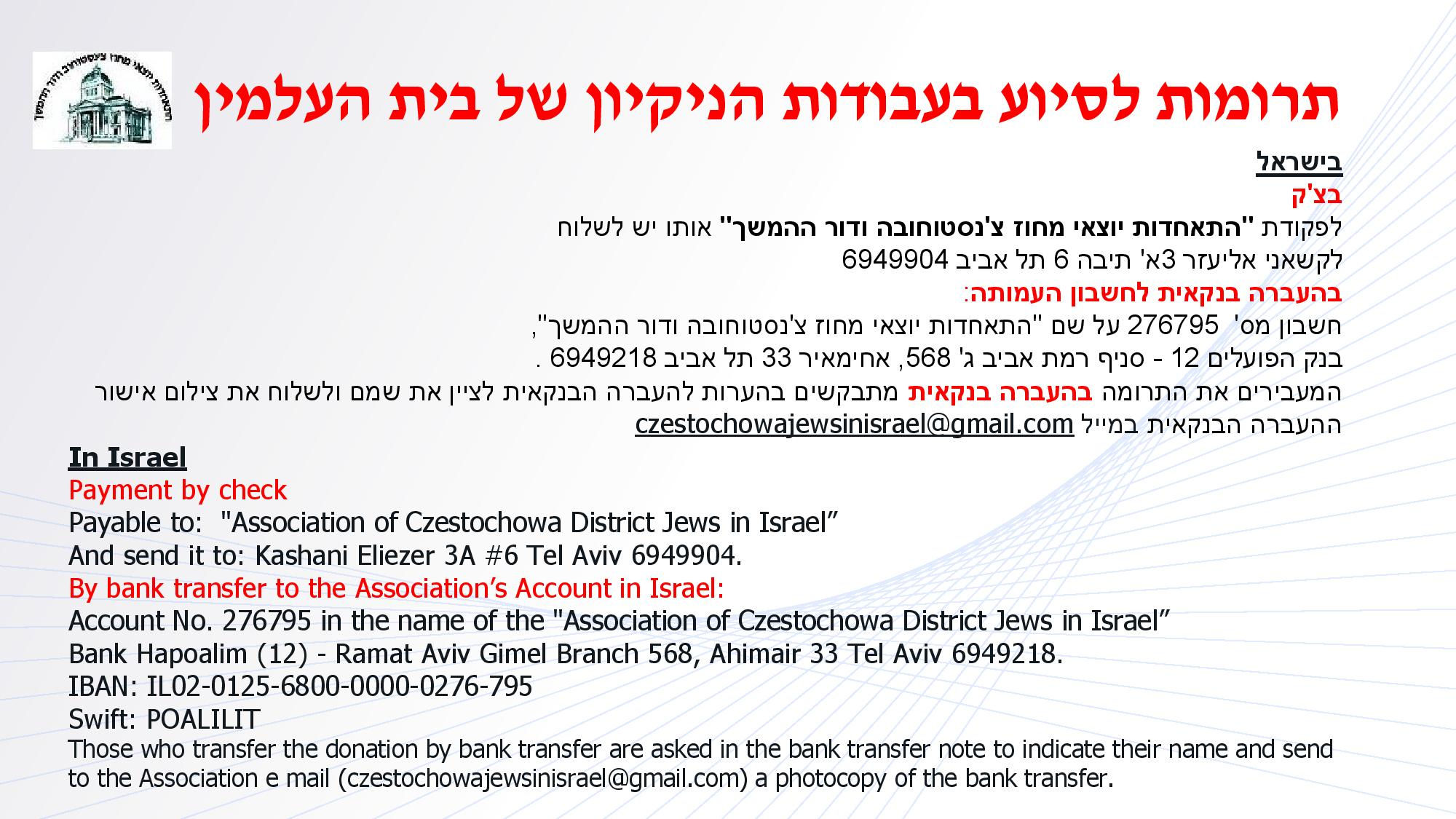
The Association of Częstochowa Jews in Israel supports these works by financing the purchase of tools and gloves,
as well as protection against ticks and mosquitoes.
We also hire skilled aborists and mulching machines as needed.
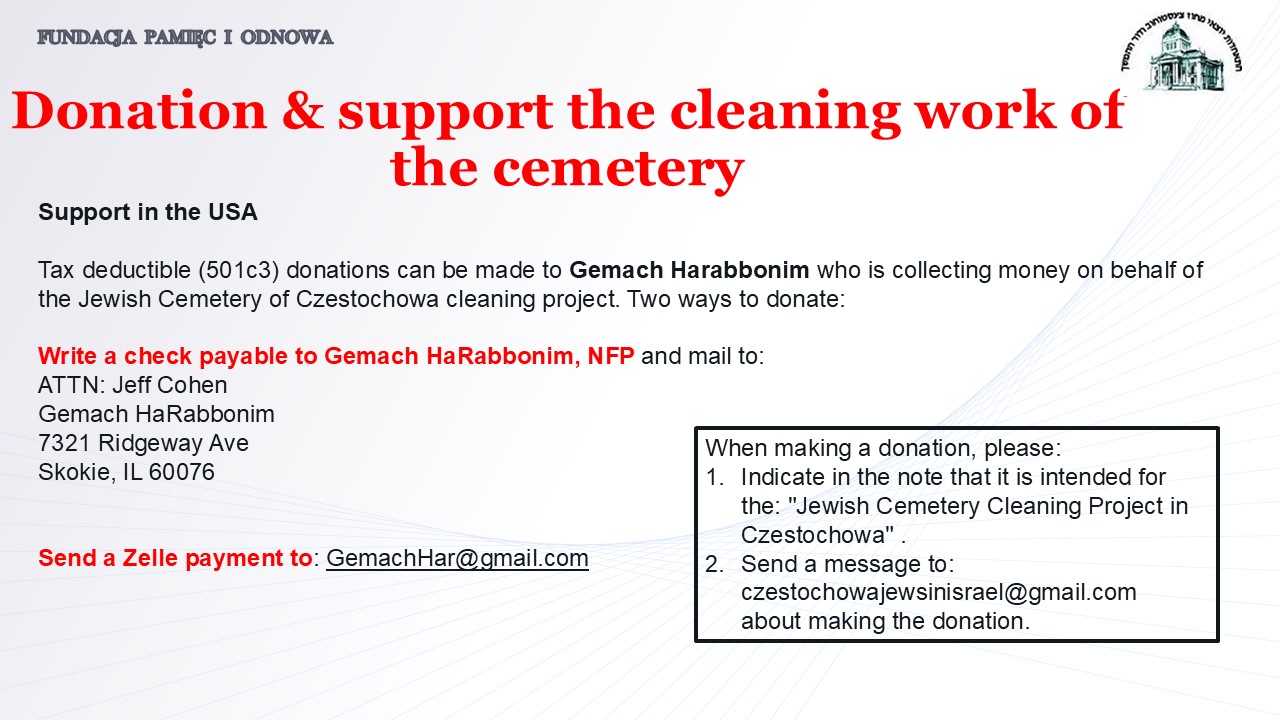
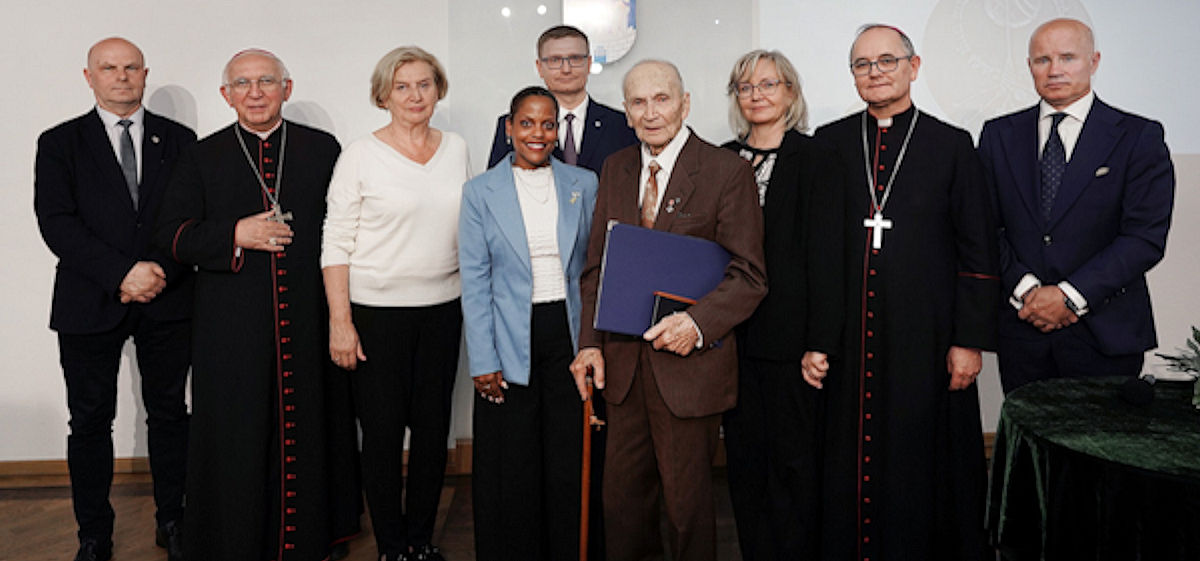
Together, with your support and contribution, we can do more! A donation to support our activities can be made as detailed below:
Honouring Another Częstochowa Righteous Among the Nations
aragorn
Source: Alon Goldman, Israeli Embassy in Poland, Marcin Bocian
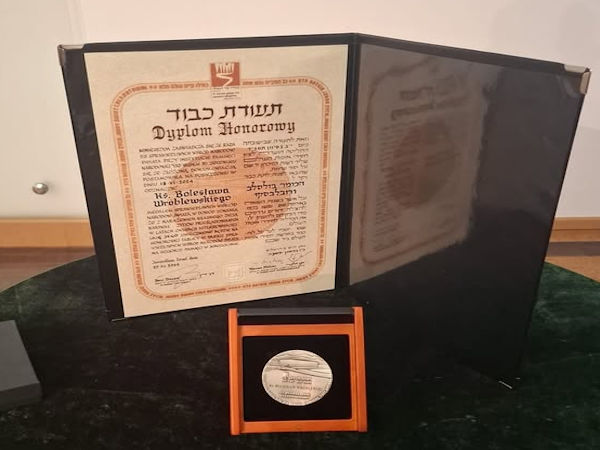
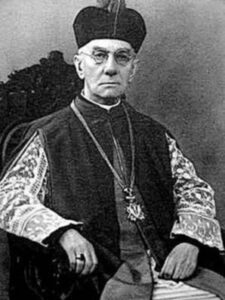 Years after the end of World War II and the Holocaust, the Yad Vashem Institute has posthumously awarded the title of “Righteous Among the Nations” to Father Bolesław Wróblewski, a Częstochowa priest who, during the Holocaust, saved Jewish children in Częstochowa.
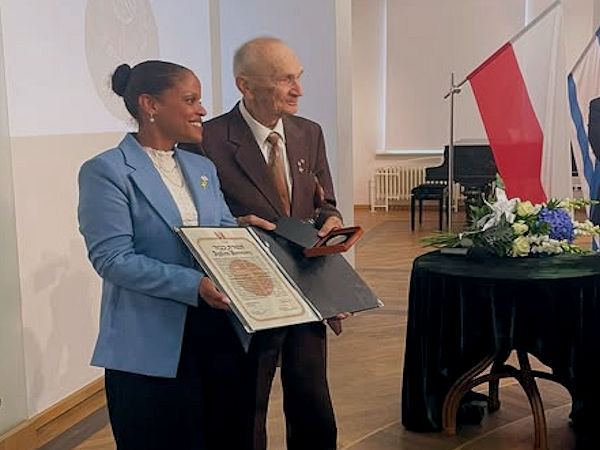
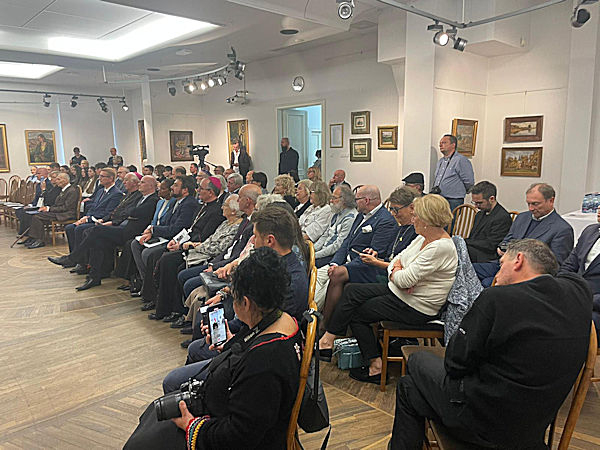
In a moving ceremony in Częstochowa’s Old Town Hall, , attended by the Mayor of Częstochowa, Krzysztof Matyjaszczyk, the Archbishop of Częstochowa, Dr. Wacław Depo, members of the city’s Jewish community and guests, Bosmat Baruch, Deputy Ambassador of Israel to Poland, presented the Yad Vashem Certificate and Medal to Bolesław Majewski, 93, the priest’s nephew.
This presentation took place many years after the application was submitted to Yad Vashem by Miriam Rothschild (nee Rubin) and six years after our World Society Vice-President, Alon Goldman, learned of the application, and began to take action on the matter.
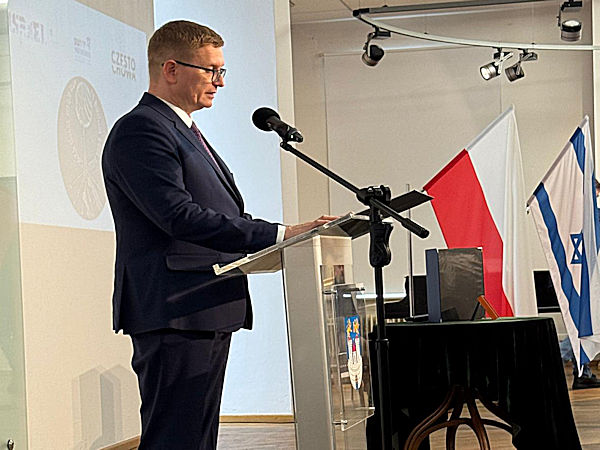
As he was unable to be present at the event, World Society Vice-President, Alon Goldman wrote the following, which was read by Krzysztof Strauss:
It is never too late to do the right thing!
On behalf of the Jewish people, the State of Israel, Yad Vashem, and the descendants of the Jews of Częstochowa, today, we stand in awe and deep gratitude honouring the work of a man who chose good – even when evil ruled the world.
Father Bolesław Wróblewski, with rare courage and a strong moral spirit, risked his life to save Jewish children in the Holocaust. Through acts of kindness, compassion and courage, he gave them shelter, hope and life – when many others chose to remain silent or hide their faces.
 I first heard the name of Priest Wróblewski and the story of his rescue efforts in the Holocaust in 2018. When I began to investigate, I discovered that, since 2007, Yad Vashem has had an open file with a recommendation
 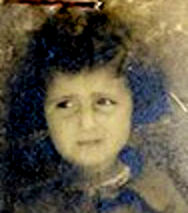 to award him the title of “Righteous Among the Nations”, a recommendation given by Miriam Rothschild (née Rubin). Yad Vashem had difficulty in accepting the testimony and relying solely on Miriam’s recollections since, at the time, Miriam was a three-year-old girl, and what does such little girl remember?
Miriam family’s roots are deeply rooted in Polish soil in Radomsko and Częstochowa. Her parents, Moshe Alexander Rubin of Radomsko and Deborah of the Schlesinger/Silberszcz family from Częstochowa, were married in the Częstochowa ghetto in 1940.
Miriam was born in Częstochowa on 2nd March 1942. During the liquidation of the “Big Ghetto” in September 1942, in a wicker basket with a note containing her personal details and with the help of a family friend, little Miriam was delivered to a children’s home at ul. Kazimierza 1, which was run by the “Convent of the Sisters of the Handmaids of Częstochowa” and the responsibility of the Father Bolesław Wróblewski.
Miriam was there until 11 December 1944. A month before the liberation of Częstochowa, she was adopted by the Dobosz family from Elbląg near Gdańsk.
Miriam’s mother did not survive the Holocaust. She was shot by the Germans during the liquidation of the “Small Ghetto” Her father, who survived the HASAG forced labor camp in Częstochowa, rushed to the children’s home on the first day following liberation and asked to have Miriam returned to him.
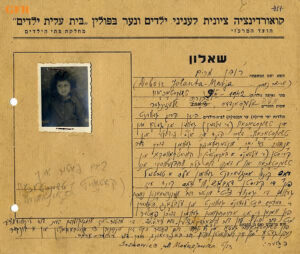 At the children’s home, they gave him the information that was written in the documents (incorrect information) and, beyond that, were not willing to help him reclaim his daughter. Moshe, Miriam’s father, did not give up. For over two years, he continued to search for his little daughter until May 1947, when he wrote to his wife, a childhood friend whom he married after the War, “My dear, the sun has risen again”, after he had managed to find Miriam and reach an agreement with her adoptive parents to return her to him.
On 13 May 1947, Miriam’s father and his little daughter appeared at the offices of the “Koordinatsia” (a Jewish organization which worked to return Jewish children to their parents), where they filled out a card and photographed Miriam. (pic left)
According to what I have been told, Father Wrobelwski saved many children during the Holocaust but, over all the years, no list or additional testimony from survivors has been found about his work.
During my search for testimony, I met Father Jan Związęk, who simply told me, “You will not find such a list. Such a list meant a death sentence in the Holocaust for anyone in who possessed it and for anyone listed on it.”
I continued searching around the world and came across Lucy Nisker in Canada and Dr. Zilberschatz in Haifa, who were with Miriam in the children’s home. However, they were unable to assist with the testimony.
In my search in the archives of the Ghetto Fighters Museum in Israel, I was surprised to find Miriam’s coordination card, written in Yiddish and containing the name of Father Wroblewski, a card filled out by a coordination activist and Miriam’s father, two adult,s who mention the priest as the girl’s saviour.
And so, without being able to discover any more names of children saved by the priest, approval was received to award the title of “Righteous Among the Nations” to Father Wróblewski.
What he did is a candle of remembrance for humanity in a dark period and, today, he joins the ranks of “Righteous Among the Nations” – those unique individuals, who illuminated the face of humanity with precious light.
May the legacy of Father Wróblewski be living testimony for us and for future generations that, even in the most difficult moments, it is up to man to choose – and to save.
Yes, It is never too late to do the right thing!
Finally, I would like to thank Dr. Ryszard Stefaniak, Deputy Mayor of Czestochowa for the partnership, assistance and hosting of the ceremony in Częstochowa, Mr. Aleksander Czyżewski from the Embassy of Israel in Poland for the organization and taking care of all the details, and the Director of the Czestochowa Museum, Ms. Katarzyna Ozimek, for directing the ceremony.
Below, thanks to Marcin Bocian, is a video of the event (with English subtitles):
Plaque Unveiling at the Site of the Former Częstochowa Jewish High School
aragorn
Source: Alon Goldman, Asia Sidorowicz, Marcin Bocian
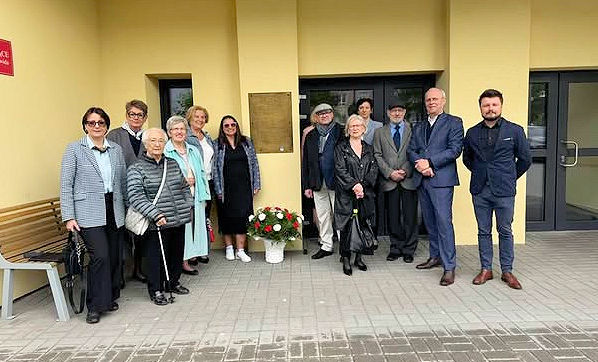
Today, a memorial plaque was unveiled at the entrance to the former Częstochowa Jewish Gymnazjum (High School), now the home of the C. K. Norwid IX Comprehensive High School.
Thank-you to the high school director, Krzysztof Wachowiak, for his positive response and to our friend, Marcin Bocian, for his support and assistance in everything related to the preparation and installation of the plaque.
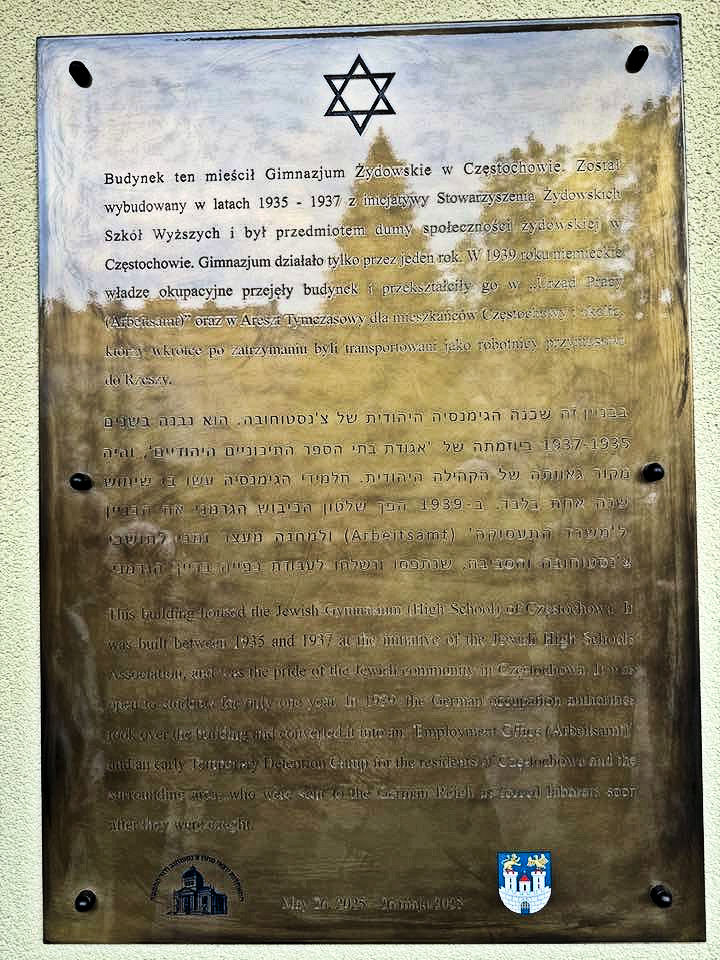
The English text (also in Polish and Hebrew) on the plaque reads:
This building housed the Częstochowa Jewish Gymazjum (High School). It was built between 1935 and 1937 at the initiative of the Jewish High Schools Association and was the pride of the Częstochowa Jewish community.
It was open to students for only one year.
In 1939, the German occupation authorities took over the building and converted it into the “Employment Office (Arbeitsamt)” and an early Temporary Detention Camp for residents of Częstochowa and the surrounding area, who were sent to the German Reich as forced labourers after they had been caught.
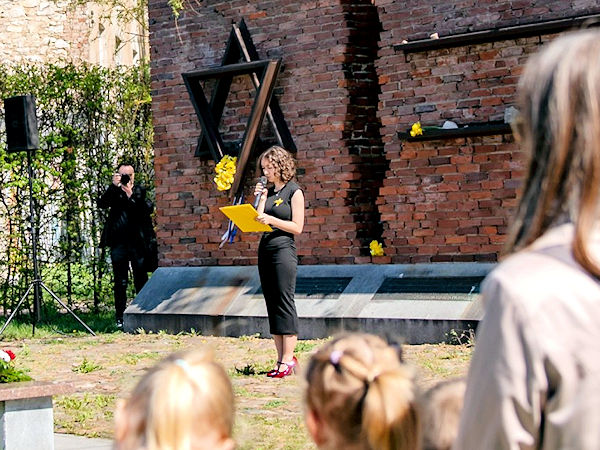
Częstochowa TSKŻ Commemorates 82nd Anniversary of Warsaw Ghetto Uprising
aragorn
Source: Alon Goldman
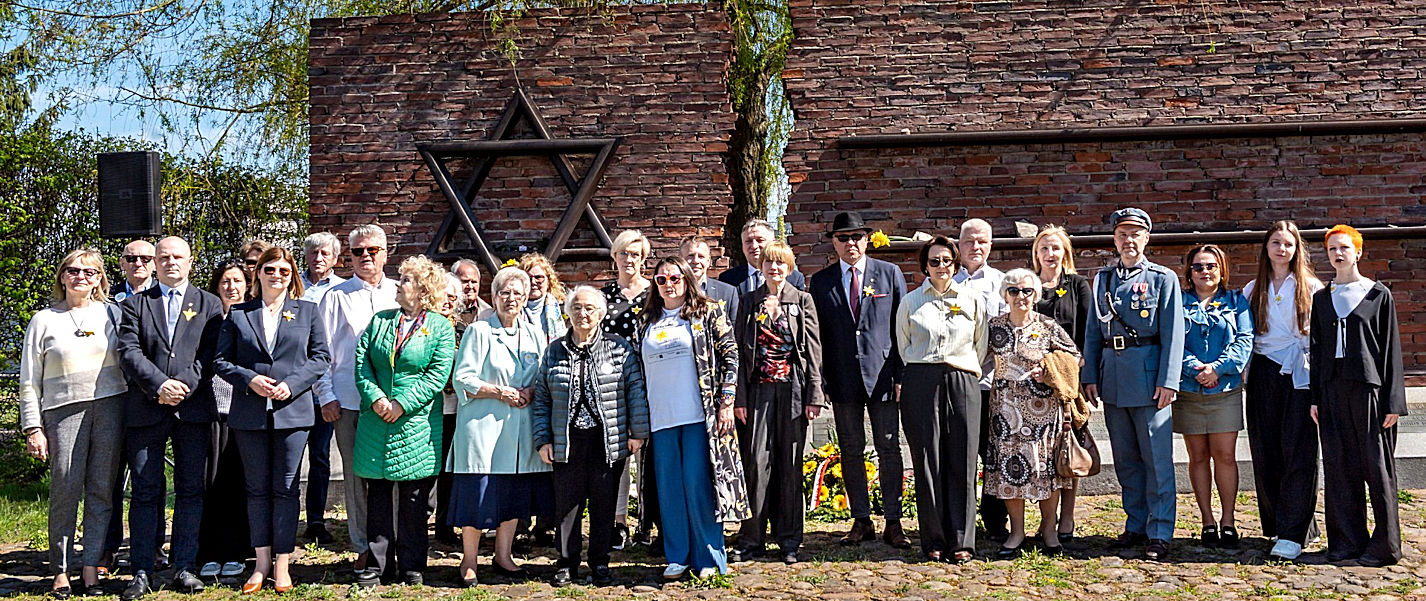
The Częstochowa branch of the TSKŻ commemorated the 82nd anniversary of the Warsaw Ghetto Uprising
by organising a ceremony at the Częstochowa Jewish Memorial.
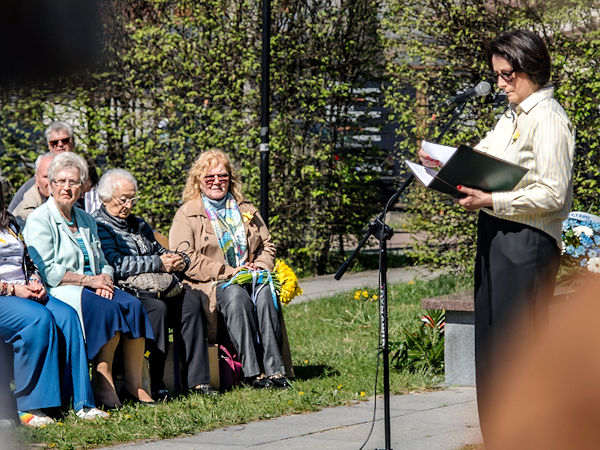
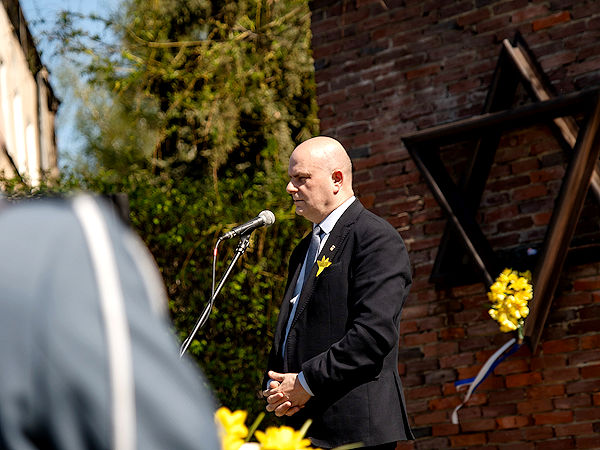
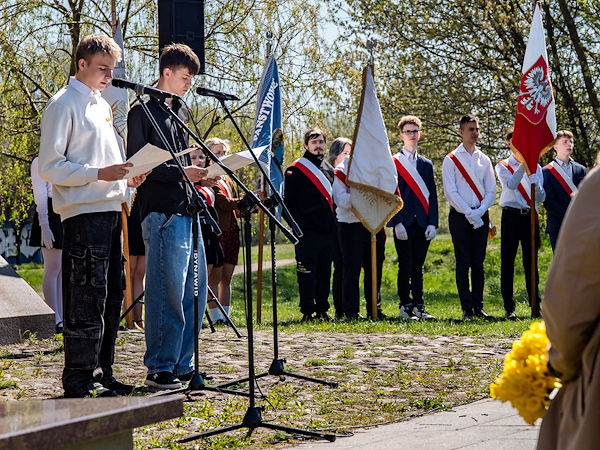
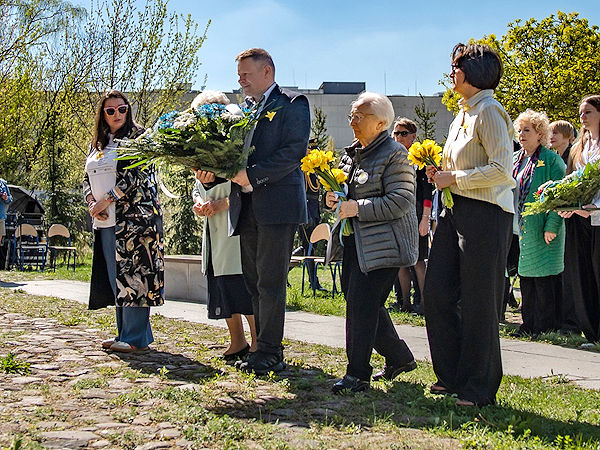
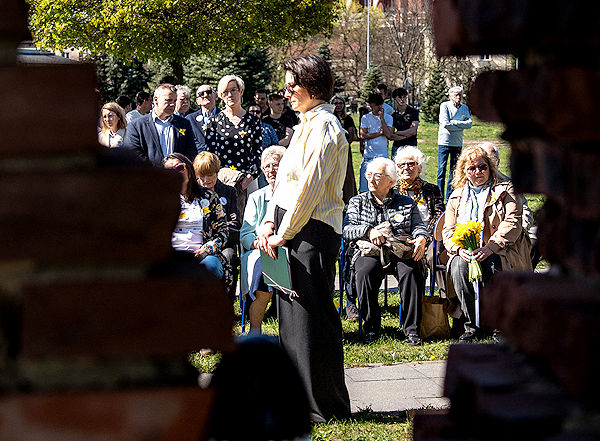
Members of the Częstochowa TSKŻ were joined, in the ceremony, by representatives of the Częstochowa City Council,
descendants of Righteous Among the Nations, school directors and students and members of the local Częstochowa community.
Częstochowa TSKŻ Celebrates Purim
aragorn
Source: Asia Sidorowicz
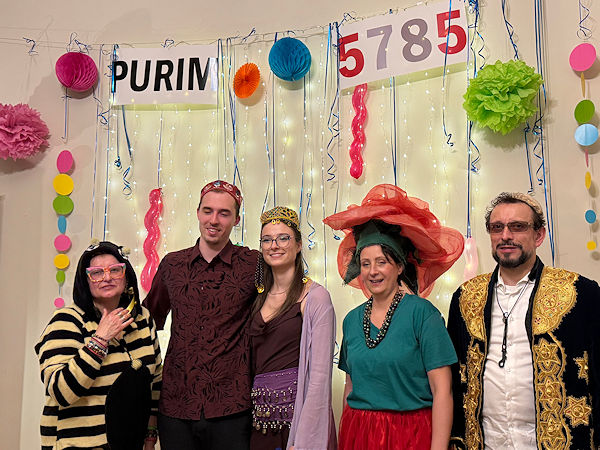
On Friday, 14th March 2025, as each year, the festival of Purim was celebrated by the Częstochowa Jewish community, and its supporters, at the rooms of the Częstochowa branch of the TSKŻ (Social-Cultural Association of Jews).
A highlight of the evening was a concert of Jewish songs, “Purim Frajlach”, performed by members of the Jarmuła Band – Piotr Siekierka, Ireneusz Czubak and Paula Czubak.
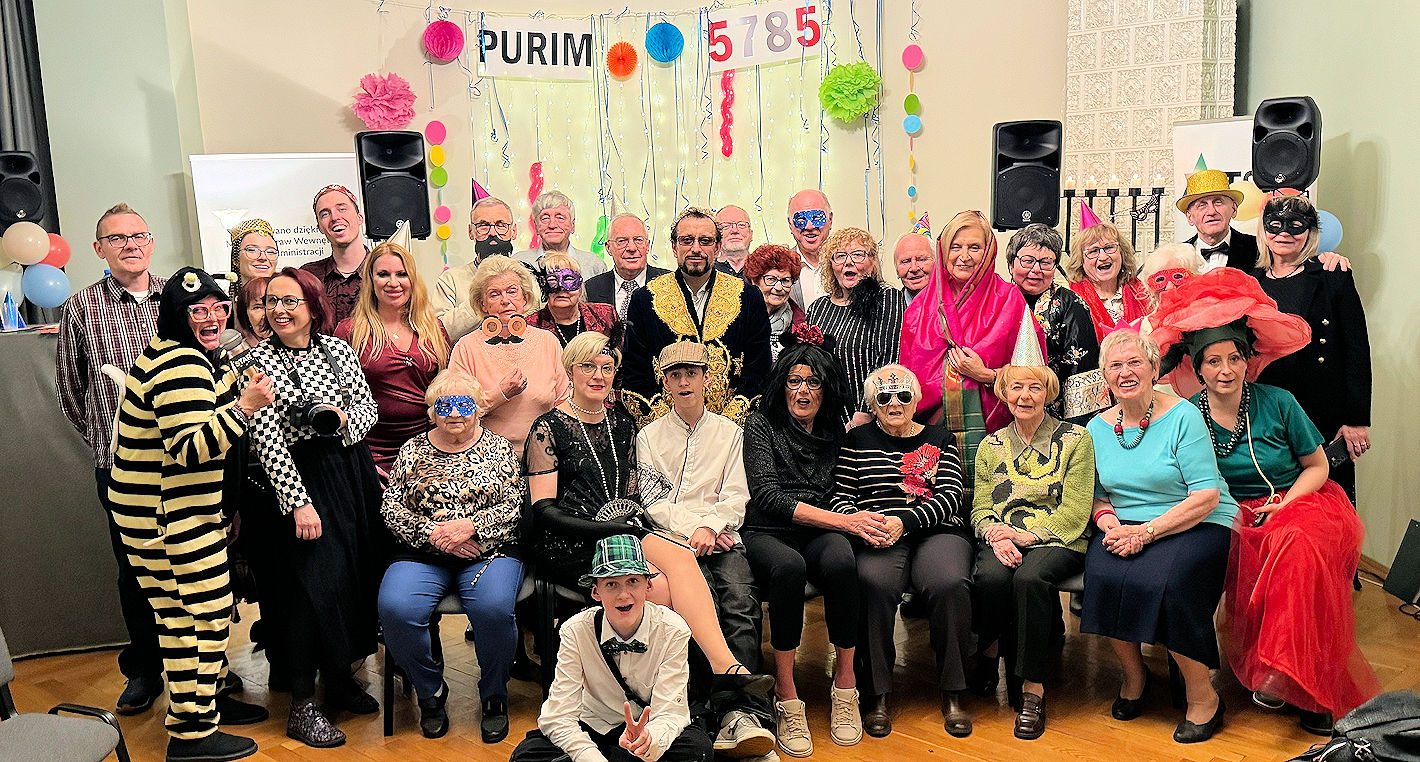
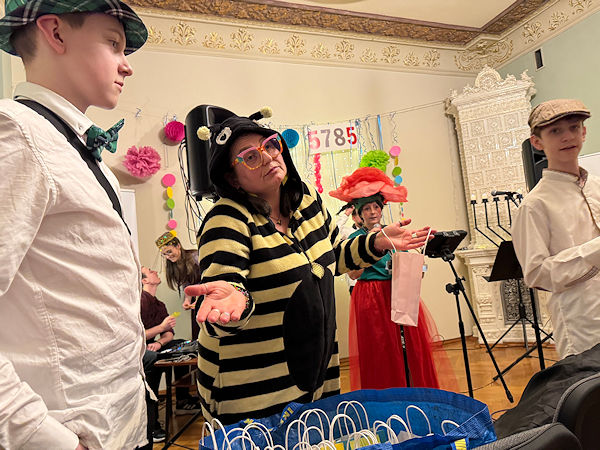
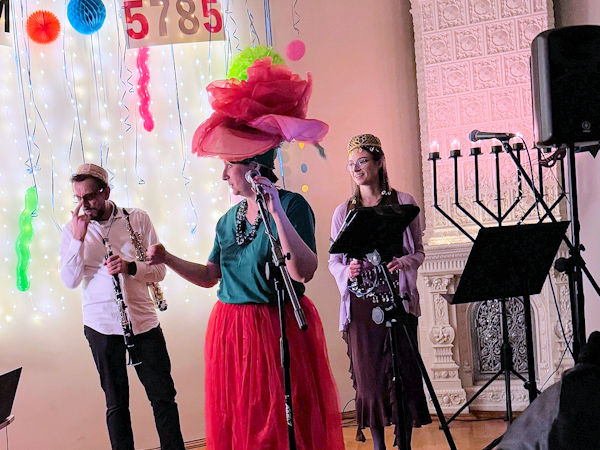
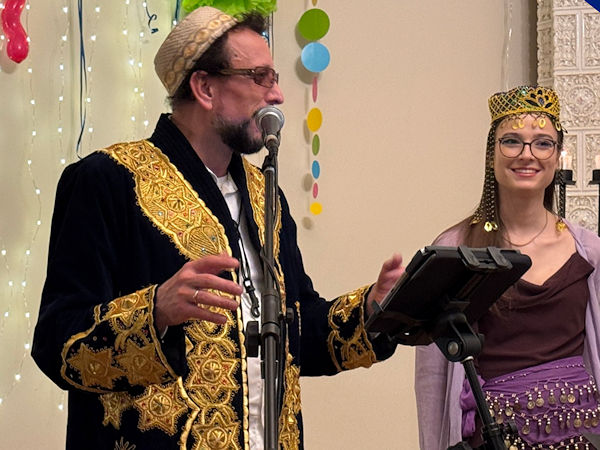
The beautiful venue for the event, the TSKŻ social rooms, is in the same building as the Jewish Museum of Częstochowa,
located ul Katedralna 8, in the Częstochowa Old Town.