6th World Society Reunion - Express Your Interest!
aragorn
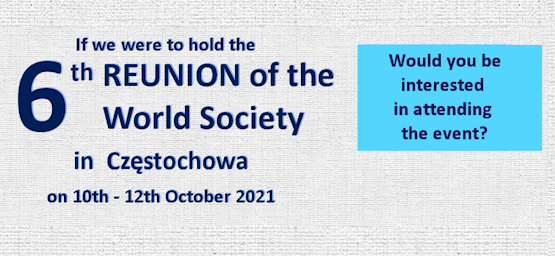
It has always been hoped that our 6th World Society Reunion can be held in Częstochowa on 10th-12th October 2021. Of course, the COVID-19 pandemic around the world has made everything uncertain. So we are STILL unsure as to whether the event can take place as hoped or whether we will need to wait until, possibly, next year.
HOWEVER, in order to be able to estimate numbers should we be able to hold our Reunion in October 2021, we are asking people to express their interest in attending.
This is NOT a registration or booking – at this stage, it is ONLY an expression of interest.
Click HERE to express your interest.

Częstochowa City Council Commemorates Częstochowa Ghetto Victims
aragorn
Sources: Jolanta Urbanska, Deputy Chair, Częstochowa City Council,
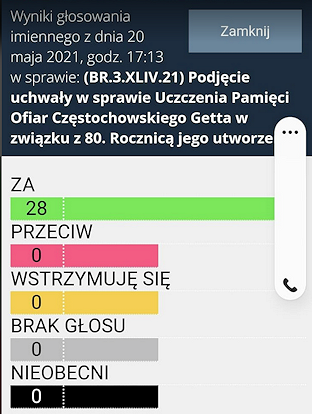
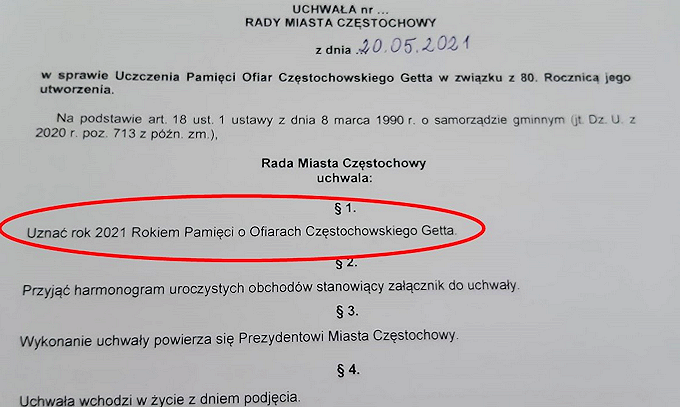
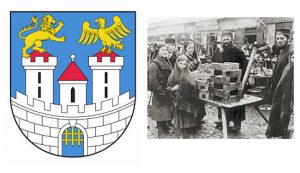 The Częstochowa City Council, today, unanimously passed a resolution declaring, in Częstochowa, 2021 as the Year of Remembrance of the Victims of the Częstochowa Ghetto. Adoption of the resolution is in connection with the 80th anniversary of the ghetto’s establishment.
On 9th April 1941, the German mayor of Częstochowa, Richard Wendler, proclaimed the establishment of a ghetto in the north-eastern part of the city. The Jews were given until 23rd April to move into the ghetto, an area from which 3,000 non-Jewish residents were evicted.
Following the mass deportations in September and October 1942, on 1st November 1942, a much smaller area near the Warta River was established. It became known as the “Small Ghetto”. It was surrounded with barbed wire and had only one gate. With the arrival of Jews from other labour camps, the “small Ghetto” had a population of more than 5,000.
In mid-1943, following further mass murders, the “Small Ghetto” was liquidated. The 4,000 remaining Jews were then sent to slave labour camps – 3,350 to HASAG-Pelcery and the remainder to HASAG-Warta.
Reference: The Yad Vashem Encyclopedia of the Ghettoes During the Holocaust, Vol.1, 2009.
World Society Vice-President Awarded Poland's Gold Cross of Merit
aragorn
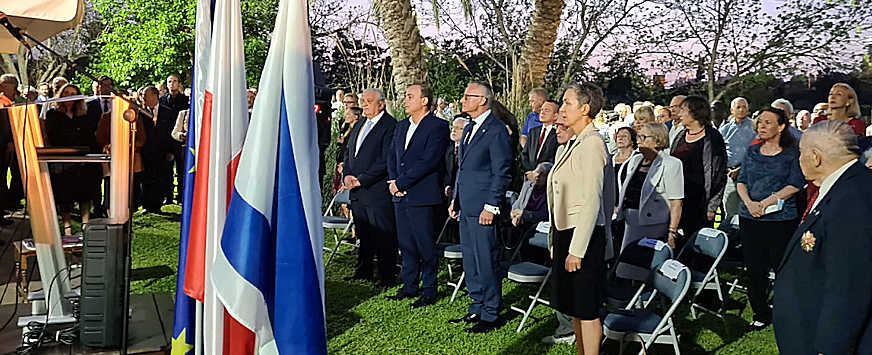
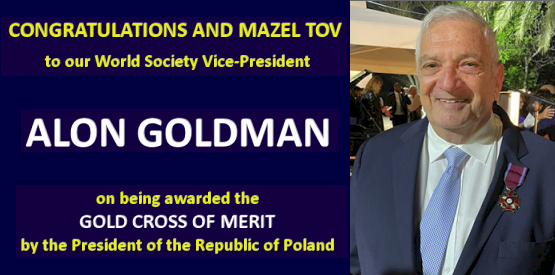
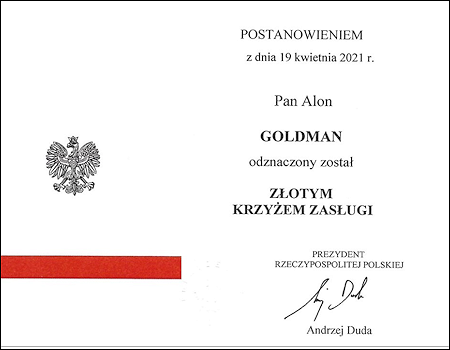
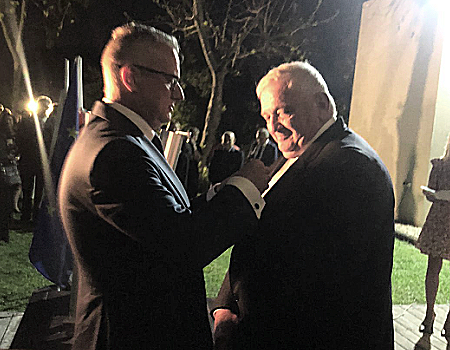
At a reception held at the residence of the Polish Ambassador to Israel to mark the Poland’s “Constitution Day”, our World Society Vice-President and Chairman of the Association of Częstochowa Jews in Israel, Alon Goldman, was presented with the “Gold Cross of Merit” by the Ambassador of Poland, Marek Magierowski, on behalf of the President of the Republic of Poland, Andrzej Duda.
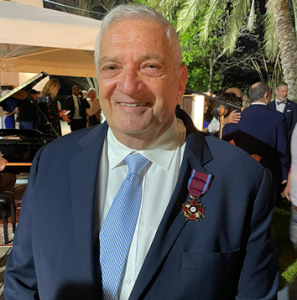 This award is presented in recognition of “exemplary public service or humanitarian work that goes above and beyond the call of duty”. In Alon Goldman’s case, it was awarded in recognition of his volunteer activities towards the building of bridges between Poland and Israel.
In a speech, immediately prior to the presentation of the award, Ambassador Magierowski referred to Alon Goldman as “a partner with whom we have already fulfilled countless initiatives and a friend you can always count on. His command of Częstochow’s history is unparalled”.
Referring to Alon Goldman’s achievements, he added that “he was so glad that so many young Jews and young Poles have deepened their knowledge about this beautiful city, which is so historically important to Polish Catholics and to the Jewish community”.
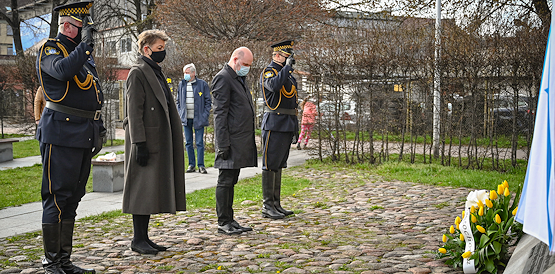
Częstochowa Commemorates 78th Anniversary of the Warsaw Ghetto Uprising
aragorn
Source: Alon Goldman
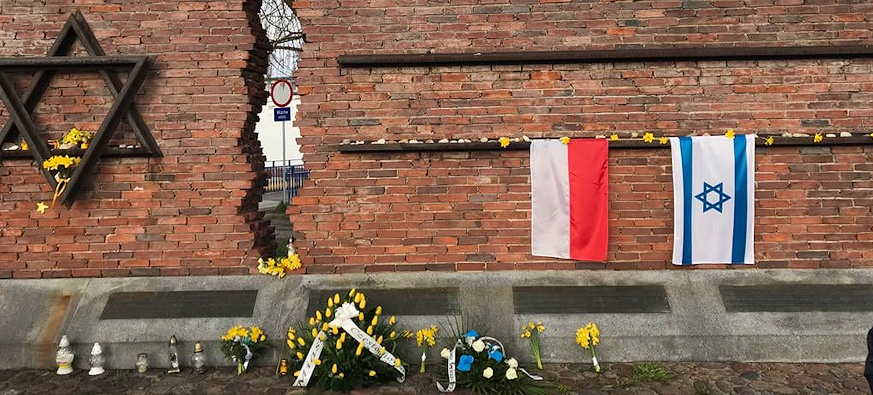
Częstochowa, just as in other places across Poland and Israel, commemorated the 78th anniversary of the Warsaw Ghetto Uprising.
Several events were held to mark the occasion.
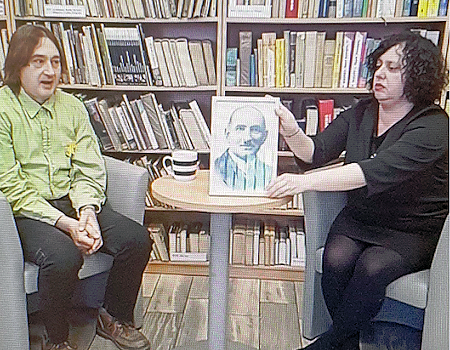
In an online lecture organised by the Częstochowa Public Library, Janusz Moskalik, together with Ilona Kowalska, spoke about Częstochowa during the Holocaust.
He also spoke about the bunker located at Stary Rynek 24 (the Old Market Square), where Hersz Frajman (whose photograph sits on the table) hid his family and neighbours, a total of twenty seven Jewish residents, during the liquidation of the “Big Ghetto”.
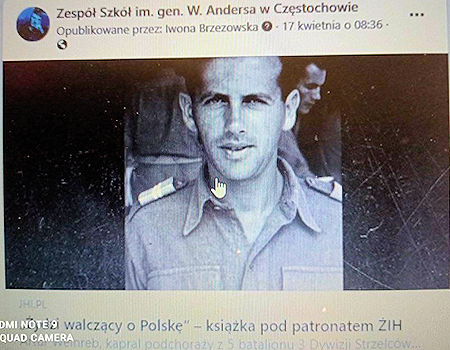
High schools in Częstochowa also marked the anniversary.
Yellow daffodils were distributed and worn
and the subject was discussed.
Below:
General W. Anders High School
Right:
Juliusz Słowacki Comprehensive High School
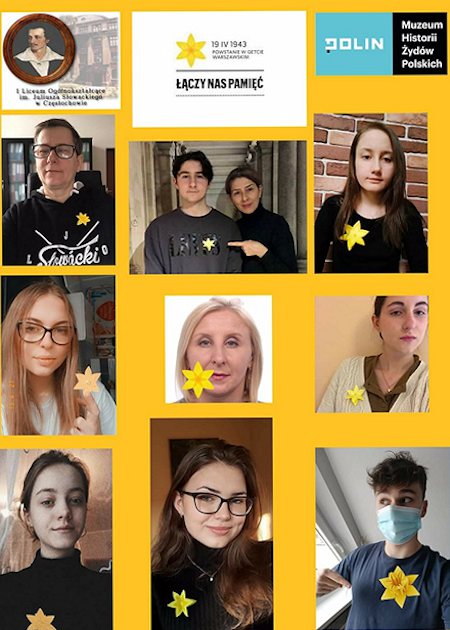
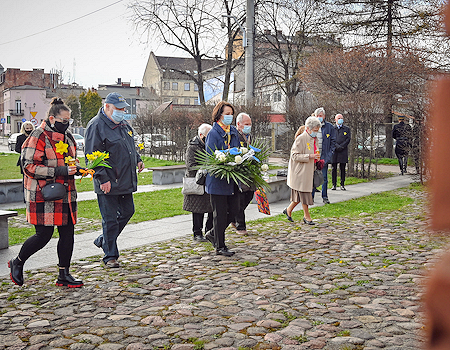
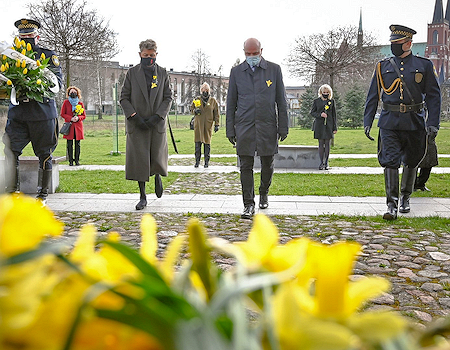
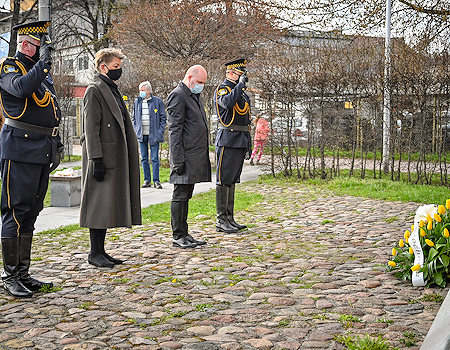
In the afternoon, yellow daffodils were laid at the foot of the Częstochowa Umschlagplatz monument,
which commemorates the 40,000 Jews transported from there to the Treblinka extermination camp.
Those taking part included
Częstochowa Deputy Mayor Dr. Richard Stepaniak,
Deputy Chair of the Częstochowa City Council Ms. Yolanda Urbanska,
Chair of the Częstochowa branch of the TSKŻ
Mrs. Isabella Sobańska Klakowska
and local residents who came to honour the memory of those who perished in the Holocaust.
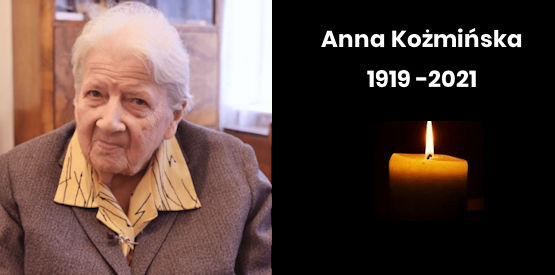
Vale Anna Kożmińska obm (1919-2021)
aragorn
Source: POLIN Museum of the History of Polish Jews
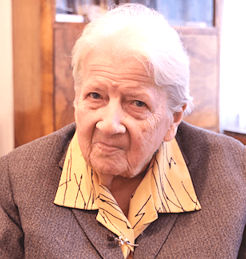 It was with great sadness that we learned of the passing of Anna Koźmińska (1919–2021), the world’s oldest Righteous Among the Nations (1991) and honoured by the President of Poland with the Commander’s Cross of the Order of Polonia Restituta (2016). She passed away on 24th March 2021, at the age of almost 102.
During the Holocaust, in Częstochowa, she and her stepmother, Maria Koźmińska ( née Hoffman), helped Abraham Jabloński, an eight-year-old Jewish boy who, with the help of his family and Polish friends, had escaped from the Częstochowa ghetto.
Despite his “bad appearance”, little Abraham was able to go about quite openly outside the ghetto and was even supposed to serve as an altar boy in the Paulist monastery on Jasna Góra. He hid with the Koźmiński ladies until January 1945.
Click HERE to read the Anna’s story.
Częstochowa Umschlagplatz Monument Desecrated
aragorn
Sources: Alon Goldman, Jolanta Urbańska and Gazeta Wyborcza
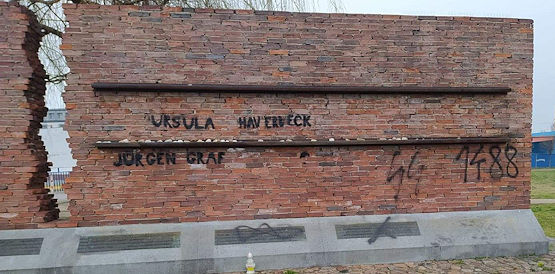
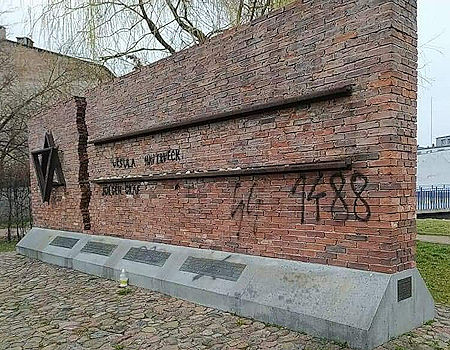
Yesterday, Holocaust denier vandals desecrated the monument, in memory of Częstochowa Jews, located on the site of the former Umschlagplatz, (now named “Samuel Willenberg Square”) from which approximately 40,000 Czestochowa Jews, from 22nd September 22 to 7th October 1942, were packed into six transports and sent to their deaths at the Treblinka German death camp.
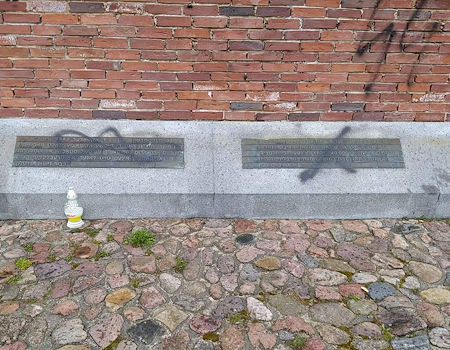
On the monument, the vandals wrote the names of Jürgen Graf, a well-known Holocaust denier, and Ursula Haverbeck, a neo-Nazi Holocaust denier. A complaint was filed by the municipality to the police who opened an investigation and the municipality undertook to take care of the cleanliness of the monument
The desecration was discovered by the Straż Miejski (City Guard), who regularly patrol the area, who immediately reported the crime to police.
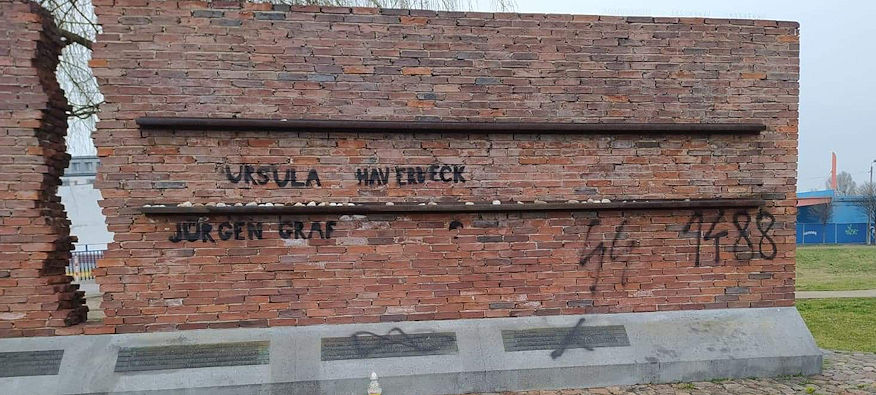
Częstochowa City Councillor and advisor to the Mayor on Jewish community matters, Jolanta Urbańska, said, “This is something more than just ordinary, thoughtless vandalism. These inscriptions clearly indicate that this act was perpetrated by people well-versed in Nazi symbolism. The numbers written on the monument are a symbol of the Nazi salute, and the two names on the monument are the names of people, so-called historians, who have denied the Holocaust. It is terrifying that this happens in the middle of Europe in the 21st century”.
Jolanta Urbańska stated that this crime is the result of what has been going on in Poland for years. This is the effect of consenting to the propagation of extreme right-wing, even anti-Semitic, slogans.,
“No wonder that such terrible things happen. This permission to propagate extreme right-wing and even fascist attitudes brings such terrible results. The area, where the monument stands, is monitored by the city”, she said.
Camera footage has been secured and given to the police, which could help catch vandals.
“I reported the case to the Town Hall”, said Jolanta Urbańska. “From there, I received an assurance that, as soon as possible and of course, after the evidence has been secured by the police, the monument would be cleared of these filthy inscriptions”.
In writing to Alon Goldman, Cr. Urbańska stated, “What can I write? That I am ashamed? Yes! Yes! That I’m sorry? Yes! Yes! What can I write? That I’m ashamed? Yes! That I ask for forgiveness? Yes! Today I am ashamed that I’m Polish”.
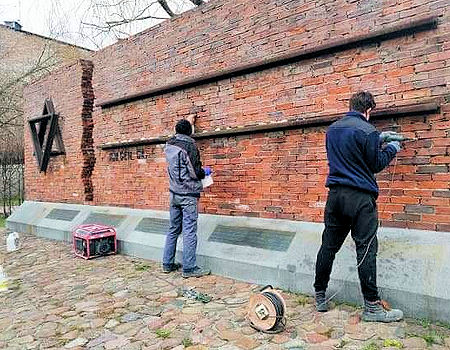
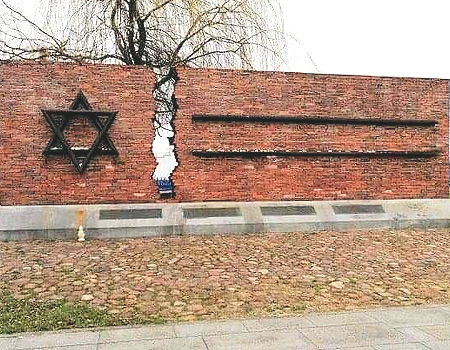
Thanks to the efforts of Cr. Jolanta Urbańska, and with the urging of World Society Vice-President Alon Goldman, the City Council has now cleaned off all the marks of desecration and restored it to its original condition.
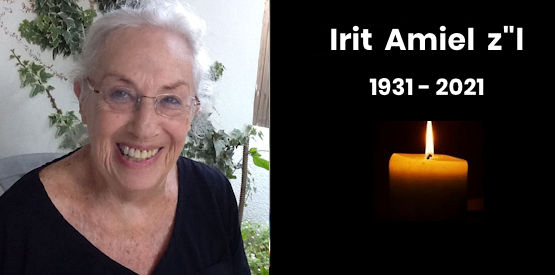
Vale Irit Amiel z"l (1931-2021)
aragorn
Source: Alon Goldman
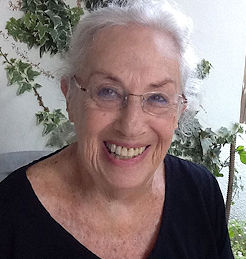 It was with great sadness that the World Society learned of the passing of writer and poet Irit Amiel Z”l, who has passed away at the age of ninety. Irit was born in Częstochowa, as Irena Librowicz, on May 5, 1931, to a modern Jewish family. Częstochowa is where she spent her childhood.
In 1941, she and her family were moved into the local ghetto. Just prior to its liquidation, in September 1942, her parents managed to extract her from the ghetto. Irit’s parents, Leon and Natalia Librowicz, died in the Treblinka extermination camp in 1942.
Under a false identity and using false documents. Irit hid in the village of Pocieszna Górka near Piotrków Trybunalski. At the end of World War II, she returned to her hometown where, for a short time, she studied attended high school. With the help of the “Ha’Bricha” organisation, she left for Israel in late 1945. Together with a group of young people, she managed to reach Israel in December 1947, having passed through displaced persons camps in Germany (Biberach an der Riss), Italy (Turin) and Cyprus.
At the beginning of her career in Israel, she lived in Kibbutz Beit Hashita and, from 1949, in Kibbutz Palmachim. It was there that she met Chozi Amiel, whom she married in 1953.
In the late 1970’s, Irit Amiel studied philology, history and literary history at the Open University of Israel. Between 1981 and 1985, she undertook translation studies at Beit Berl and began translating literary texts from Hebrew to Polish and from Polish to Hebrew.
She made her literary debut in 1994 with an anthologyn of Hebrew poems in a book about the Holocaust. A Polish-language edition of the same book was published in that same year. Other literary works followed, all of which were also published in Poland. These include poetry entitled “I Could Not” (1998), “Test in the Holocaust” (1994, 1998), “Here and There” (1999), “Breathe Deeply” (2002) and prose entitled “Burned” (1999), “Dual Display” (2008 ) And “Life – a Temporary Title” (2014). She has twice been nominated for a Nike Literary Award.
Her works have also been published in English, German, Italian and Hungarian.
In May 2014, as part of the “Aleja tu się dziejie” Festival, for the last time, Irit visited Częstochowa with her daughter and took this opportunity to walk with her through her childhood areass. This visit was filmed and a doumentary was made entitled “And Yet I Won – To jednak ja zwyciężyłam”. To view the video, click HERE.
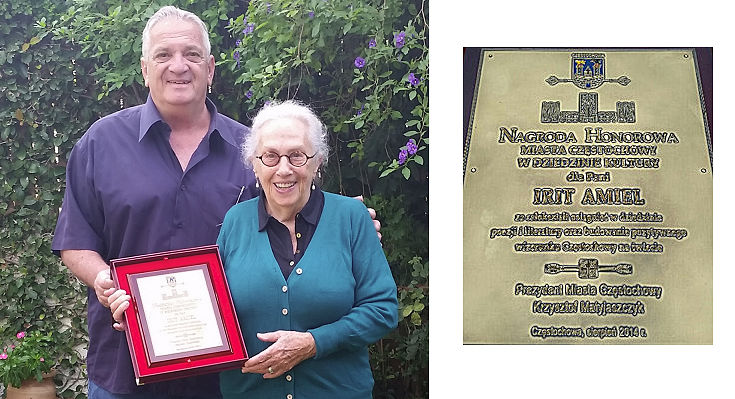
On 29th August 2014, the City of Częstochowa conferred on Irit Amiel an Honorary Award for her cultural activities. The award was presented to her, at her home in Ramat Hen, by our World Society Vice-President Alon Goldman, on behalf of the Mayor of Częstochowa.
We wish her family long life – may her memory be a blessing to her family and to all who knew her.
Two New Books About Częstochowa Jewry
aragorn
Pictures: Alon Goldman and the Częstochowa Municipal Museum
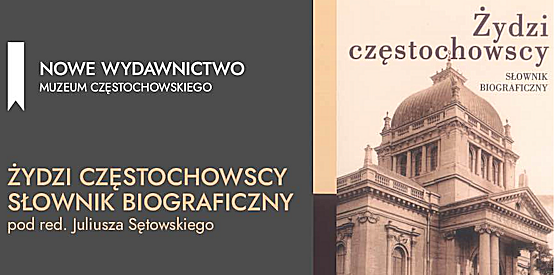
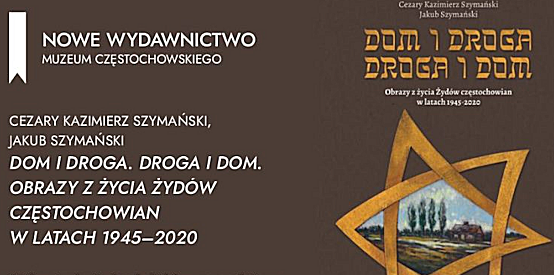
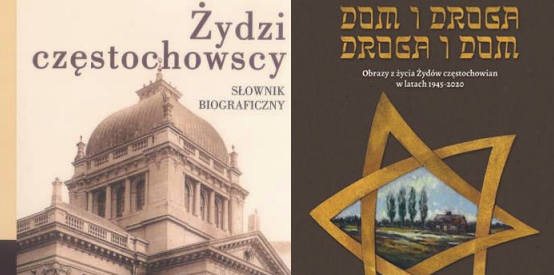
Two new books about the history of Częstochowa Jewry, in Polish, have just been published by the Częstochowa Municipal Museum and are now available for purchase.
To purchase eithere or both books, contact Ms. Magdalena Motyl at the Museum’s publishing house:
Email: wydawnictwa@muzeumczestochowa.pl (Polish and English) or telephone: +48-34-360-5631 (Polish)
The Jews of Częstochowa – a Biographical Dictionary, edited by Dr. Juliusz Sętkowski
This book won the 2020 Wolf & Dora Rajcher Memorial Award as judged by an academic panel from the Jan Długosz University of Częstochowa. The Award is presented annually, the prize for which covers the cost of the book’s publication.
It contains almost 600 biographies of Jews who were associated with Czestochowa in the 19th, 20th and early 21st centuries. It includes those who were born and lived permanently in Częstochowa, as well as those who were associated with the city for a short period or even several years. What determined their inclusion in the publication was their professional and creative activity or social service within the community. Some of the distinguished individuals in the directory were born in Częstochowa, but left at a young age and their contributions became well-known elsewhere – in Israel and abroad.
Included are profiles of Jews who were significant in the history of the city and the state. They include the names of Jews active in the economic, political, local, social, religious and scientific frields, as well as in education, health, law, sports, culture and art.
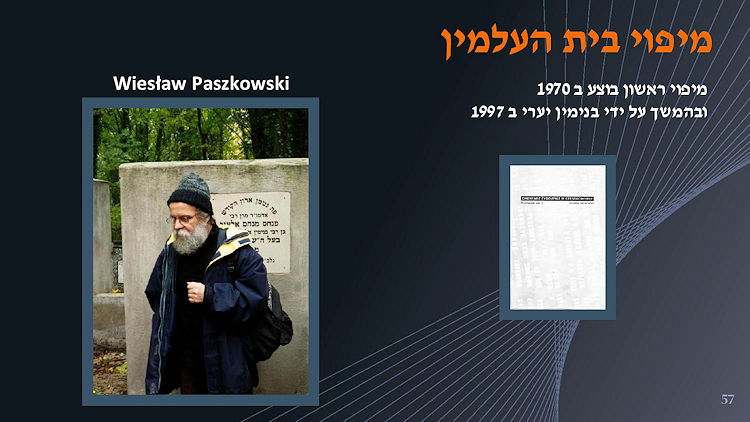
This book is the result of research by many people over many years – in archives, published bibliographies and press reports – as well as efforts to obtain information directly from families. The work makes extensive use of necrology, documenting information about deceased people, as well as broader memories describing the activities of a given person. Much information was taken from inscriptions engraved on the cemetery tombstones. The book makes use of the extensive material contained in the first volume of the cemetery book by Wiesław Paszkowski, “The Jewish Cemetery in Czestochowa”, which was published in Czestochowa in 2012.
Beginning from the late 1990’s, the author of these words documented the information in a biographical file of the Jews of Czestochowa. In 2006, after the establishment of the Czestochowa History Documentation Center (ODDC) at the Czestochowa Museum, the above file found its place there. As a result of numerous inquiries, the file was constantly expanded (it now has over 2,000 biographical cards). A separate file was created to accommodate Wiesław Paszkowski’s research on the Czestochowa Jewish community. This collected material, now in digital form, is also in the ODDC.
Most of the personalities in the directory are introduced for the first time. The authors in their work have attempted to supplement or amend the arrangements hitherto employed in biographical studies. In order to facilitate the use of the directory resources, along with a number of surnames that appear in the biographies, the sign → referring to the biographies of other people (relatives, business partners, friends) is displayed. At the end of each resume there is a bibliography that refers to relevant literature on the subject.
Droga i dom. Dom i Droga (The Road and Home. Home and the Road.) by Cezarek Kazimierz Szymanski and Jakub Szymanski
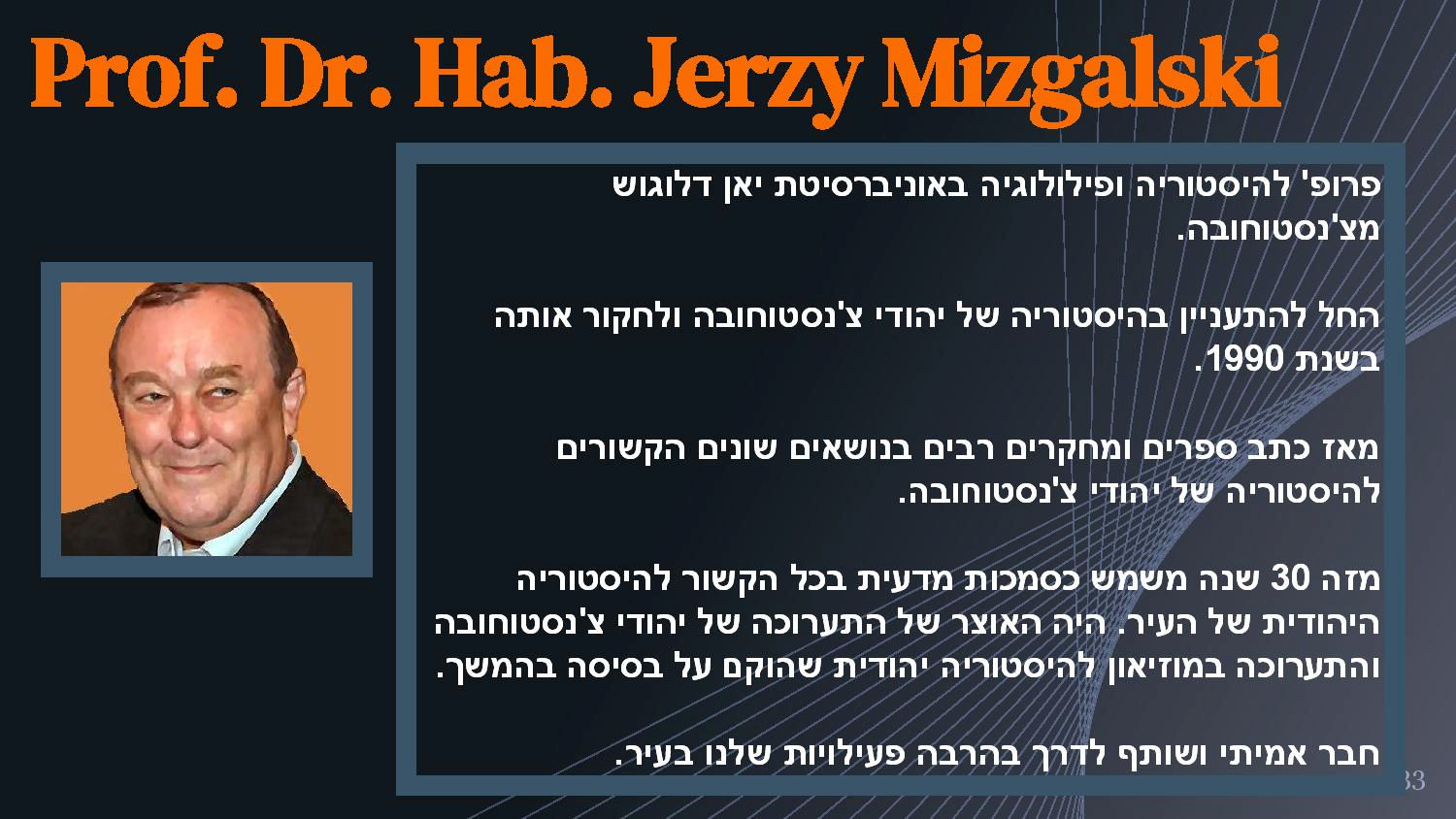
An excerpt from the introduction to the book, by Professor Jerzy Mizgalski of Jan Dlugosz University of Czestochowa, reads:
Pictures from the lives of Jews of Czestochowa, in the years 1945-2020, is the first comprehensive work which presents important and, at the same time, difficult research concerning the Jewish community in Czestochowa after World War II. The difficulty in this case is to reach widespread sources, to collect reports of generations of “survivors”, both those who remained in Częstochowa and those who are scattered all over the world. The authors achieved this.
The important value of the narrative, as presented by the authors, is in conveying to the contemporary reader facts in accordance with their objective interpretation, which expresses the interest of the entire Czestochowa community. Attempting to present, comprehensively and objectively, the history of the city after World War II is not easy. The variety of life experiences or political possibilities doubles the expectations for a narrative that is consistent with different areas of interest – political, national, social or individual. The authors’ indication of the fate of both Christians and Jews, during the difficult period of Nazi occupation and the process of rebuilding political and communal life after the War presents a picture of the socio-political diversity of Częstochowa and its inhabitants.
The value of this research assumes greater importance as a result of recording memories from those generations which, due to their age, have been taken from us and, along with them, much information from this tragic period in their lives.
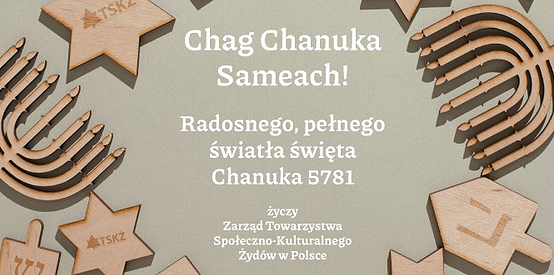
No Częstochowa TSKŻ Channukah Celebration Due to COVID
aragorn
Pictures: Błazej Tatarek and Alon Goldman
 Due to the COVID-19 pandemic, this year’s Channukah celebrations in Poland will either be held online or not at all. This affects all Jewish Community Centres and branches of the TSKŻ throughout the country.
This, of course, also includes the Częstochowa Branch of the TSKŻ (the Social-Cultural Association of Jews) which, traditionally, holds a joyous Channukah function each year.
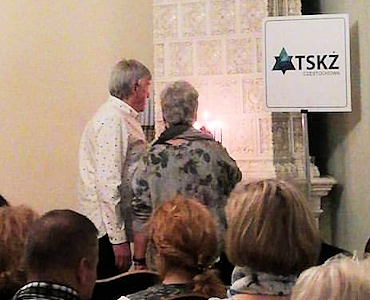
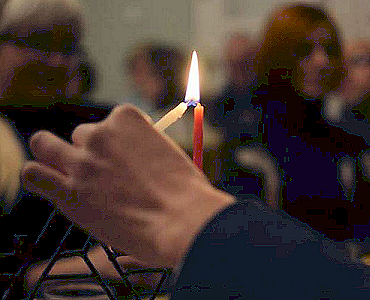
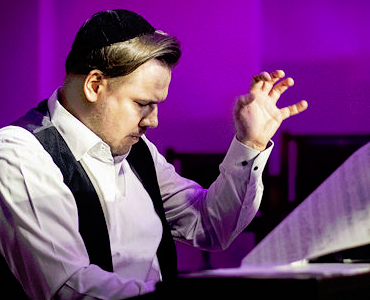
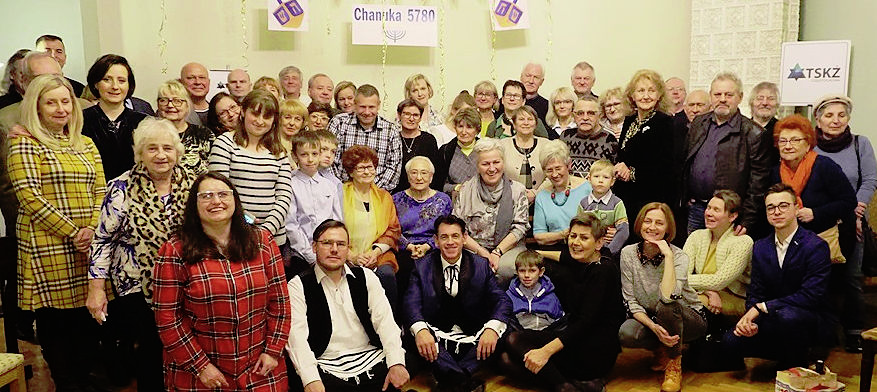
So, in wishing everyone a happy and, most importantly, a healthy Channukah, below are some pictures from the Częstochowa TSKŻ Channukah festivities from 2018 and 2019.
Częstochowa Landsleit in Israel Hold "Virtual Memorial Service"
aragorn
Words and pictures: Alon Goldman
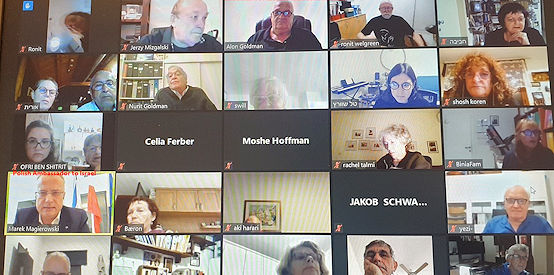
 The Association of Częstochowa Jews in Israel held its Annual Memorial Service on Thursday 3rd December 2020, marking the 78th anniversary of the liquidation of the Częstochowa Ghetto.
Unlike in previous years, the Memorial Service was held unconventionally, via Zoom. The Association had endeavoured to postpone the event in the hope that the COVID pandemic situation would improve, thus allowing the Association to held the event as in previous year – but to no avail. This year, the Service had to be “virtual”.
The event was opened by Association Chairman Alon Goldman.
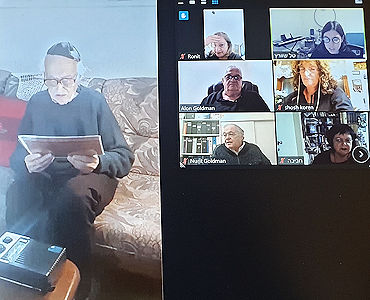
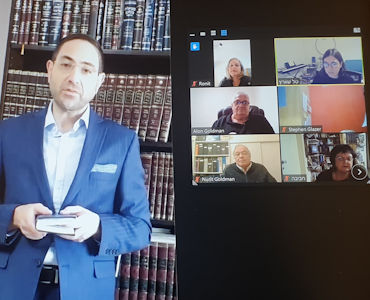
Following Alon Goldman’s opening remarks,
Kaddish was recited by Holocaust Survivor Eliezer Kirschenbaum (pic left)
and
memorial prayer El Male Rachamim was recited by Rabbi Ari Enkin (pic right).
The event was honoured with the presence of the Polish Ambassador to Israel, His Excellency Mr. Marek Magierowski. In his remarks, he noted that the organization’s activity serves as an example of building a bridge between peoples.
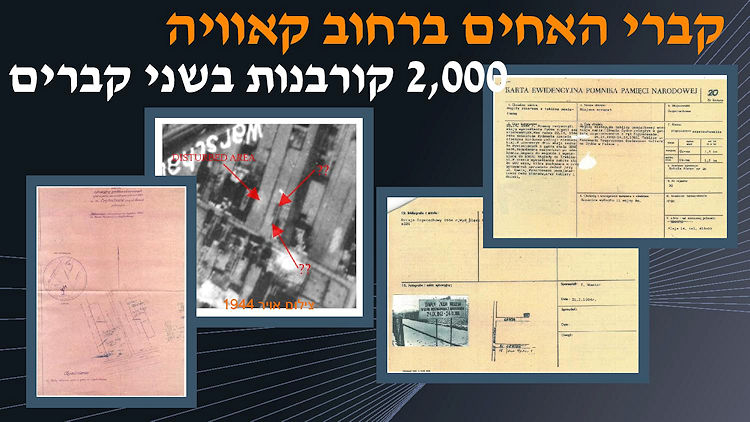
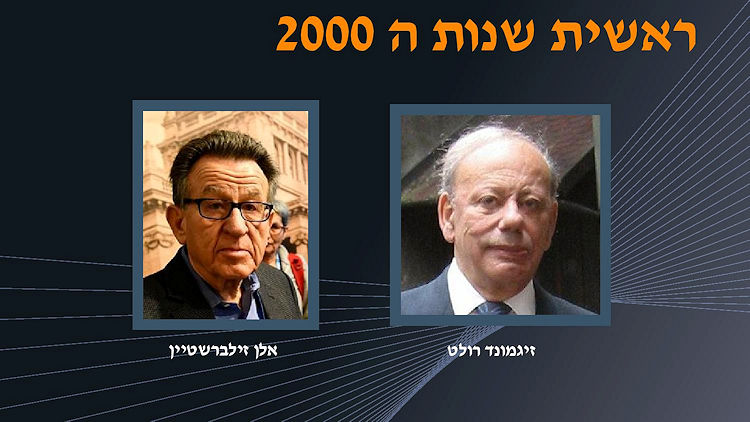
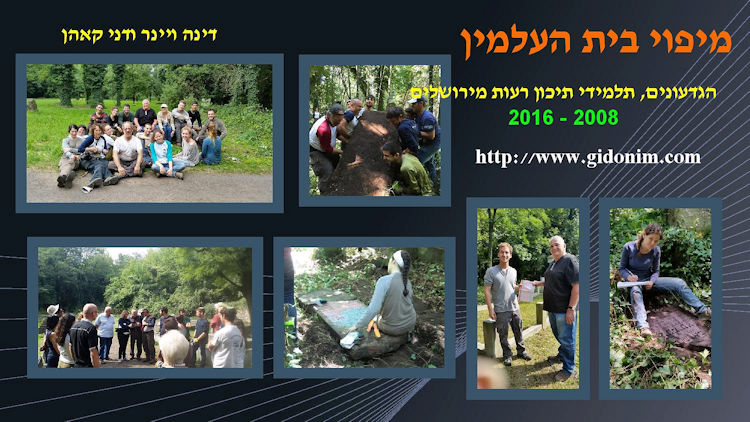
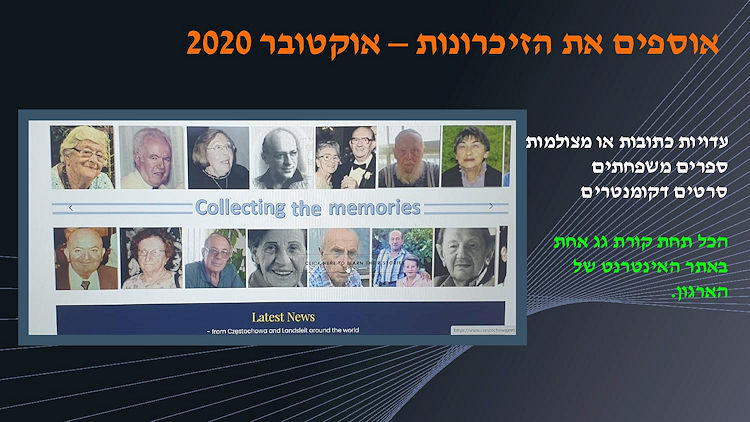
In the second part of the Memorial Service, Alon Goldman delivered a lecture entitled “Preserving the Częstochowa Jewish Heritage in the Mirror of Generations”. In the lecture, he reviewed the various activities carried out over the years, from the date of the liberation of Częstochowa by the Russians to the present day, for the preservation of the city’s Jewish heritage. He described the challenges faced and talked about the people whose contribution was significant in these activities in the various areas (click on images to enlarge):